Patila
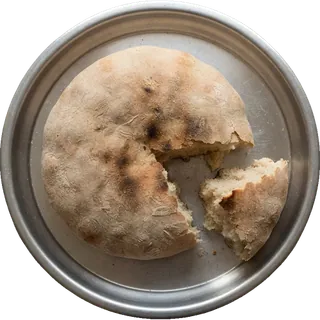
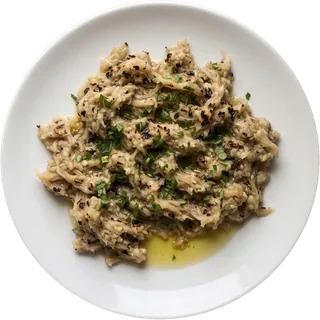
Patila is a thin wheat-dough bread folded over a mashed chickpea filling, cooked on a flat iron sac griddle until lightly charred, eaten warm at breakfast or with tea.
How to order
Bir patila alabilir miyim, tereyağsız olsun lütfen?
Patila is a thin dough folded over spiced chickpeas and baked on a sac griddle, with butter brushed on after baking—the plant base is the dough and legume filling, but butter enters as the finishing fat. To serve plant-based, the dish requires negotiation of the butter application, stated in Turkish as “Bir patila alabilir miyim, tereyağsız olsun lütfen?” (literally, “Can I have a patila, let it be without butter please?”).
History
Patila comes from Tunceli province, in the mountain region many residents still call Dersim in Zazaki, the main language of the area. It is a home-baked flatbread of thin wheat dough folded over a filling of mashed boiled chickpeas, onion, and ground red pepper or cumin, then laid directly on a flat iron sac griddle set over a wood fire until the dough blisters and browns. Women in Zaza villages make it most mornings, rolling the dough thin enough to see through before folding it closed. The name is sometimes written patile, and the dish appears on breakfast tables and at the tea hour, cut into wedges and shared from a single tray.
The dough and the chickpea filling are both plant in origin: wheat flour, water, salt, mashed chickpeas, onion and spice. The animal product enters after the bread leaves the sac, when the cook brushes melted butter across the hot surface before it is cut and served. This happens in the kitchen, not at the table, so a diner cannot scrape it off afterward; the only way to keep the dish plant-based is to ask before it is brushed, requesting it without butter, or tereyağsız. Where a bakery brushes every round as a matter of course before any order is placed, there is nothing left to ask.
Where to get it
Sold in bakeries, tea houses and home kitchens across Tunceli town and the Zaza villages around it, mostly in the morning hours and heaviest through the autumn and winter tea season.