Pomme de Terre de l'Île de Batz
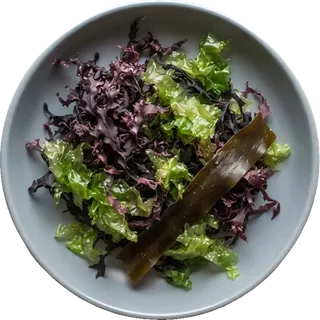
Early potatoes raised on the half-square-mile Île de Batz, off Roscoff, in sandy ground fed each spring with seaweed hauled up the beach by tractor and cart, a practice two centuries old. Islanders and Roscoff market stalls sell them from May, boiled whole and eaten with salt.
How to order
Un kilo de pommes de terre de l'île de Batz, s'il vous plaît.
The tuber itself carries nothing animal, so buying them raw at a stall needs no further question. Where they arrive already cooked, in a crêperie or at a table d'hôtes, ask “sans beurre, sans lait ribot, s'il vous plaît” to get them without the butter and buttermilk usually served alongside.
History
The Île de Batz sits half a square mile off Roscoff, in Finistère, reached by a fifteen-minute ferry. Its sandy soil warms early thanks to the Gulf Stream, and for two centuries islanders have fed it with goémon, seaweed cut or gathered at low tide and carried up the beach by tractor and cart. The result is a potato dug as early as May, weeks ahead of the mainland crop, sold at Roscoff market and known across Brittany as a primeur. Fewer than a hundred people now farm the island year-round, down from several hundred before the mid-twentieth century, as fishing and farming work consolidated.
The potato itself is a tuber, pulled from the ground with nothing animal attached. What follows it to the table is another matter: islanders and Roscoff cooks serve the boiled potatoes with salted butter and, in the Breton way, a glass of lait ribot, the cultured buttermilk drunk alongside new potatoes rather than mixed into them. Butter sometimes goes into the cooking water too, or is melted over the dish at the stove, not at table, so it has to be settled before the pot is served. Ask for the potatoes plain, with oil instead of butter, and skip the lait ribot.
Where to get it
Roscoff market, Wednesday and Saturday mornings at the harbour, and the island's own co-operative shop on Île de Batz, Finistère, through the primeur season from May to July; a kilo runs about €2 to €3.