Porotos con Riendas
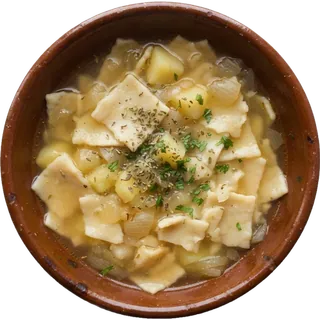
Dried beans are stewed with pumpkin until soft, then finished with spaghetti broken by hand and stirred in near the end, the strands said to resemble a harness's reins. It is a winter staple of central and southern Chilean kitchens, eaten at home and at modest lunch counters from May through September.
How to order
¿Me puede traer los porotos con riendas sin longaniza, por favor?
Longaniza or bacon goes into the pot early, fried with the onion before the beans and pumpkin are added, so it cannot be picked out once the stew is done; ask before ordering with “¿Me puede traer los porotos con riendas sin longaniza, por favor?” Some home cooks will leave it out on request if asked before the pot goes on.
History
Porotos con riendas takes its name from Chilean Spanish: riendas, reins, for the broken strands of spaghetti stirred into the pot near the end, recalling a huaso's leather harness. Beans and pumpkin, cultivated in the Americas long before Spanish colonization, are joined by wheat pasta, introduced through that colonization and later reworked by Italian immigration into a regional staple. The stew is cooked across central and southern Chile, from the Región Metropolitana to the Biobío region, through the cold months of May to September, part of the comida de olla tradition of slow one-pot cooking that stretches dried stores through winter. It appears on family tables and at lunch counters.
The base is plant throughout: dried beans, pumpkin, onion and wheat pasta simmered together in one pot. Animal product enters at the cooking stage, not at the table — most households and lunch counters add longaniza, the spiced pork sausage of southern Chile, or diced bacon, frying it first with onion to build the stock the beans cook in. Once that happens it cannot be lifted out afterward, so a plant-based version depends on whether the sausage or bacon went into the pot before the beans were added, which is the detail worth asking about before it is served.
Where to get it
Home kitchens, school canteens and modest lunch counters (picadas) across the Región Metropolitana and the Biobío region, served as a winter lunch from May to September; a plate at a picada runs CLP 3,000-5,000.