Puttu
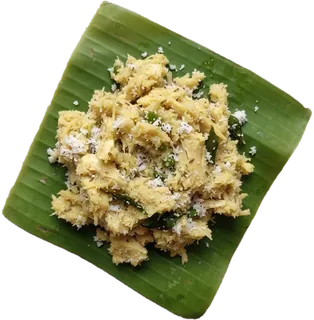
Puttu is a cylinder of coarse rice flour steamed in alternating layers with grated coconut, eaten for breakfast across Kerala, including the tea shops and homes of Thrissur, typically served with ripe banana, kadala curry, or jaggery.
How to order
ഒരു പുട്ട് തരുമോ?
When ordering in Thrissur, confirm the dish is plain by asking ‘നെയ്യ് ചേർത്തിട്ടുണ്ടോ?’ ("has ghee been added?"), and ask for it with banana or kadala curry rather than a milk-based payasam.
History
Puttu is recorded in Malabar accounts of domestic cooking from the late nineteenth century, when households across central Kerala used a hollowed bamboo or, later, a brass cylinder to steam layers of rice flour and coconut over a clay or brass pot of boiling water. In Thrissur district, the dish anchors the breakfast trade of family-run tea shops and hotels in the town's market quarter and in temple-town neighbourhoods such as those around the Vadakkunnathan temple, where it is prepared each morning in batches and sold through the late morning alongside kadala curry, ripe nendran banana, and sweetened black tea.
Puttu's standard recipe is naturally vegan: parboiled rice is dried and ground to a coarse flour, moistened with water and salt, and layered with fresh grated coconut before steaming, with no dairy, ghee or egg entering at any stage. The accompaniments served alongside it in Thrissur are also plant-based — ripe banana, jaggery, or kadala curry made with coconut oil or gingelly oil rather than ghee. The one point to check is at tea shops that finish the dish with a spoon of ghee for richness, or serve it with a sweetened milk payasam instead of banana; a diner who wants the plain version simply asks for puttu with banana and kadala curry, leaving out the ghee and any milk-based side.
Where to get it
Puttu is sold each morning at family-run tea shops, breakfast hotels and roadside stalls across Thrissur, including the market quarter near the Vadakkunnathan temple, and at home through the Onam and Vishu seasons.