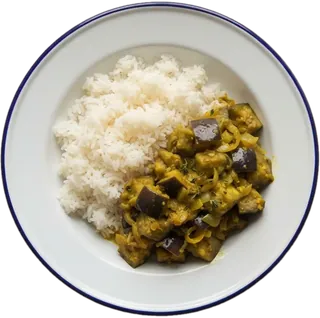
Rougail Dakatine
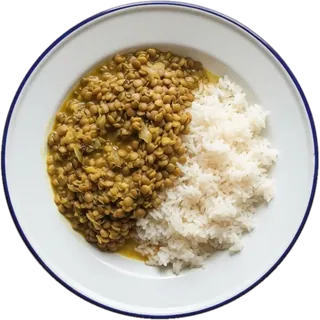
Peanut butter is loosened with hot water, then worked with onion, garlic, ginger, tomato and chilli into a thick, fiery paste. It is spooned over rice and grains at family lunches and school canteens across Réunion.
How to order
Un rougail dakatine, s'il vous plaît.
The dish is naturally plant-based when made with oil, but some cooks add a chicken or beef bouillon cube, or a knob of butter instead of oil, while the paste simmers. Ask before ordering: “C'est cuit à l'huile, sans bouillon de viande ?” If the pot was already started with a meat-based cube, asking afterward will not change it.
History
Rougail dakatine is Réunion Creole for a peanut rougail, the island's pounded condiment of onion, ginger, tomato and chilli, built here on peanut butter instead of fruit, salted fish or meat. Dakatine was a peanut butter brand sold on the island from the mid-twentieth century, and the name stuck so completely that dakatine is now the ordinary Creole word for peanut butter itself. Peanuts reached Réunion through its colonial estate economy, built first on enslaved labour, abolished in 1848, and then on indentured labour brought from India, Madagascar and East Africa. The dish is standard school-canteen and family fare, spooned over rice and grains at midday from Saint-Denis to Saint-Pierre.
The base of onion, garlic, ginger, tomato, chilli and peanut butter is plant throughout, and the paste is traditionally cooked in vegetable oil, not butter. Where animal product enters is the bouillon cube many home cooks drop in for depth, most of which are made with chicken or beef fat and extract, and the occasional spoonful of butter used instead of oil for richness. Both go in during cooking, before the dish reaches the table, so there is nothing to pick out afterward. A version made with oil and no stock cube is naturally vegan, and that is the only thing worth asking about before it is cooked.
Where to get it
Sold in small take-away pots at Réunion's marché forain stalls — Saint-Paul's Friday market, Saint-Pierre's Saturday market — and at snack counters and school canteens across the island. A portion runs about €2 to €4.