Şevketi Bostan
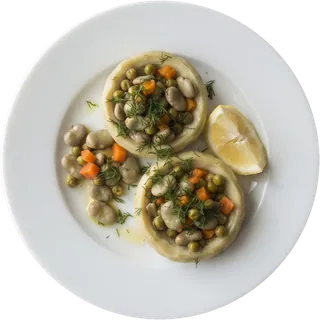
Şevketi bostan is a dish of trimmed, peeled thistle roots — the underground part of a wild golden thistle dug up in late winter — stewed slowly in olive oil, water, lemon juice and a little sugar until tender, dark and faintly bitter.
How to order
Zeytinyağlı şevketi bostan var mı, etsiz ve terbiyesiz olsun lütfen?
The blessed thistle roots are the plant foundation of zeytinyağlı şevketi bostan, stewed in olive oil with lemon, while lamb and egg-lemon sauce introduce the animal products—requiring negotiation of whether to omit the meat and beurre blanc-style finish. “Zeytinyağlı şevketi bostan var mı, etsiz ve terbiyesiz olsun lütfen?” requests the dish without lamb and without the enriched sauce, leaving pure olive oil and lemon as the final binding.
History
Şevketi bostan grows wild on the slopes and field edges around İzmir, in towns such as Bergama, Ödemiş and Tire, where it is dug up in February and March before the plant flowers. Cooks trim the thorny leaves away and scrape the long taproots clean, then cut them into short lengths and simmer them in olive oil with chopped onion, lemon juice, a pinch of sugar and water until the bitterness softens into something closer to earthy and sour. The dish also appears written as şevket-i bostan, and the root itself is sold in Aegean markets as altın diken, golden thistle, by the kilo during its short season.
In the plain Aegean version, zeytinyağlı şevketi bostan, everything in the pot is plant: thistle roots, olive oil, onion, lemon juice, sugar and water. Many home cooks and lokantas instead make etli şevketi bostan, adding pieces of lamb at the start of cooking so the meat simmers in with the roots rather than arriving later; once that pot is on the stove, the lamb cannot be lifted back out. A spoonful of egg-and-lemon sauce, terbiye, is sometimes stirred together separately and poured over the finished dish only at the table, which is the one point where a request before it is poured can still keep the dish plant-based.
Where to get it
Found at Aegean lokantas and home tables across İzmir, especially around Bergama, Ödemiş and Tire, from mid-February through March while the wild roots are being dug.