Sucrine du Berry
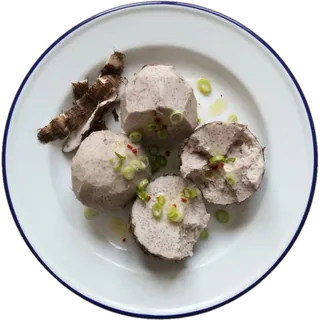
A long, pale winter squash with dense, chestnut-tasting flesh, grown from a Berry landrace selected in the nineteenth century. It is a market vegetable eaten through the Cher department in autumn and winter, roasted, turned into velouté or kept in cellars for months.
How to order
Une sucrine du Berry, s'il vous plaît.
Bought whole at a market stall, the squash is plant only and nothing needs to be asked. Ordering it already cooked, as velouté or gratin, means checking whether cream, butter or cheese went in, with “C'est sans crème, sans beurre et sans fromage ?”
History
Sucrine du Berry is an old squash of the Berry, the historical province that gave the Cher and Indre departments their shape, selected by local growers through the nineteenth century for its dense, sweet flesh and long keeping. It was a kitchen-garden and market vegetable, pulled from the earth in October and stored in cellars through winter, a hedge against the lean months on small Berrichon farms. Postwar agricultural industrialisation and rural depopulation pushed uniform hybrid squashes into the markets in its place, and by the late twentieth century the old landrace survived mainly in the hands of seed-savers and conservatoire associations working to keep it in cultivation.
The squash itself is plant only, and nothing in it comes from an animal. The question sits in how it reaches the plate: Berrichon kitchens turn it into velouté finished with crème fraîche and a knob of butter, or into a gratin topped with grated cheese, and butter is the default fat for roasting it whole. None of that is intrinsic to the vegetable — a velouté made with olive oil and stock, or a gratin left bare, works the same way — so what has to be settled is whether cream, butter or cheese went into the pot before it was served.
Where to get it
Market stalls and small market gardeners across Cher, including the Saturday market in Bourges and the market at Vierzon, sell it loose by the kilo from October to February, at roughly €2 to €3 per kilo.