Tahinopita
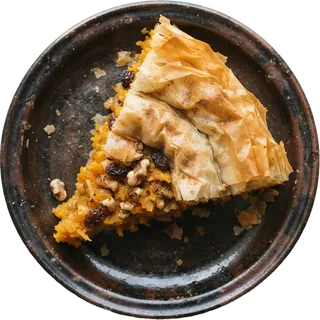
Tahinopita is a coiled spiral pastry from East Macedonia and Thrace, made of thin sheets spread with sesame paste, sugar and cinnamon and baked until crisp, traditionally sold at bakeries during Lent.
How to order
Είναι η ταχινόπιτα νηστίσιμη, χωρίς μέλι;
Ask at the counter, “Είναι η ταχινόπιτα νηστίσιμη, χωρίς μέλι;” (“Is the tahinopita Lenten, without honey?”), since some bakeries finish the pastry with honey syrup or use butter in the dough without stating it on the label.
History
Tahinopita is a bakery pastry from East Macedonia and Thrace, in northeastern Greece, made by rolling thin sheets of dough spread with tahini, sugar and cinnamon into a tight spiral, then baking it until the top browns. Bakers in towns such as Komotini and Xanthi produce it year-round but sell it most heavily during the Orthodox fasting periods before Easter and Christmas, when it serves as a dessert that observant Lenten diets permit. The filling relies on sesame paste rather than dairy or eggs, which is why it became a staple of nistisima baked goods in the region.
The dough sheets, tahini, sugar, cinnamon and oil used in tahinopita are all plant-based, so the base recipe contains no animal product. Some bakeries alter it at two points: they may brush the baked spiral with honey syrup after it comes out of the oven, or they may use butter instead of oil when rolling the sheets, both of which happen during preparation rather than at the table. Because the finished pastry looks the same whether honey or butter was used, there is no way to tell by sight; the only way to know is to ask the bakery directly before buying, since the label "Lenten" at the counter is not always applied consistently.
Where to get it
Sold at bakeries and pastry shops across East Macedonia and Thrace, particularly in Komotini and Xanthi, with supply increasing during the Orthodox fasting periods before Easter and Christmas.