Thalipeeth
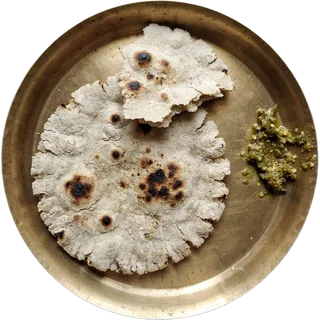
Thalipeeth is a multigrain flatbread from Maharashtra, made by patting a dough of roasted flours, onion and spices directly onto a wet cloth before it meets the griddle. Nashik households make it for breakfast and as a monsoon snack, usually with a spoon of butter or ghee melting into the centre.
How to order
कृपया एक थालीपीठ द्या, तूप नको.
Asking ‘तूप किंवा लोणी नको, तेल चालेल’ confirms the vendor will skip the finishing fat, since the dough itself is already mixed and cooked with oil alone.
History
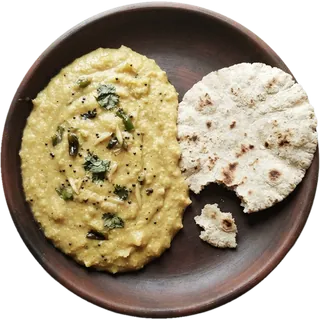
Thalipeeth is associated with Maharashtra, particularly the Khandesh and Nashik regions, where households grind a multigrain flour called bhajani, typically combining jowar, bajra, rice, chana dal, urad dal and coriander seeds, roasted and ground together. The dough, mixed with chopped onion, green chilli, turmeric and sometimes grated vegetables, is patted by hand onto a piece of wet cloth or directly on a plate rather than rolled with a pin, a method that lets thicker, coarser flours be shaped without tearing. It is eaten for breakfast or as an evening meal across Marathi households, documented as a staple of Maharashtrian home cooking rather than restaurant fare, often alongside curd or pickle.
The dough itself contains no animal product: flour, water, onion, chilli and salt are mixed and shaped without dairy or fat worked in before cooking, and the thalipeeth is cooked in oil on a griddle. What is added afterward is where ghee or butter usually appears, a spoon placed on the hot bread at the table, or a side of curd. The flatbread itself is naturally vegan as served from the griddle; the accompaniment is a separate, optional addition that a diner can decline when ordering.
Where to get it
Thalipeeth is sold at breakfast stalls and Maharashtrian thali messes across Nashik and the wider Khandesh region, and appears at home-style eateries and festival food stalls during Ganesh Chaturthi and other local observances.