Umsobo
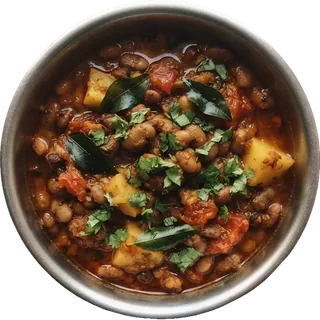
A wild nightshade whose leaves are boiled down with salt into a dark, bitter green, while its small black berries are picked and eaten raw, mostly by children, straight off the bush. Found across KwaZulu-Natal in summer, from home gardens to informal market stalls.
How to order
Ngicela umsobo, ngiyabonga.
To keep it plant-only, ask whether amasi or cooking fat went into the pot: “Ngicela ungangifakeli amasi noma amafutha, ngiyabonga” — please don't add amasi or fat for me, thank you. Durban market stalls selling umsobo often run in a mix of isiZulu and English, so the question works either way.
History
Umsobo is the isiZulu name for black nightshade, a plant gathered rather than planted, known across KwaZulu-Natal from the rural wards of Msinga and Nongoma to the market stalls of Durban. IsiXhosa speakers call the same plant umsobo too, and Afrikaans speakers know it as nastergal. Women and children do most of the gathering, picking the leaves after the first summer rains and sending children to strip the ripe berries straight from the bush. Colonial and apartheid-era land dispossession pushed many rural households off the common ground where such greens grew wild, narrowing where umsobo could still be picked.
Everything in the pot is plant: the leaves of umsobo wilted down in water with salt, nothing else required to make a meal of it. The berries eaten raw off the bush carry no animal product at any stage. Where dairy enters is at the cook's discretion, not the plant's default — some households stir a spoon of amasi, soured milk, into the greens at the end, or finish the pot with a little cooking fat. That's the one thing to settle before eating: whether amasi or fat went into this particular pot.
Where to get it
Informal greengrocers and wild-vegetable stalls at Durban's Warwick Junction market, and roadside sellers in rural KwaZulu-Natal around Msinga and Nongoma, sell it in loose bunches for a few rand each. Best from December through February, after the first summer rains bring the plant up.