Sugar Bean Curry
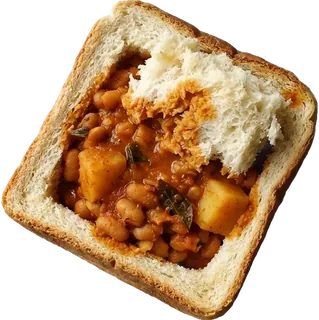
Speckled sugar beans simmered down in Durban's masala-heavy curry style, with tomato and potato thickening the sauce to a dark red gravy. Durban eats it as the vegetarian bunny chow filling and on its own on Thursdays, when bean curry is the standby special.
How to order
Ngicela ukhari wobhontshisi ongenabhotela, ngiyabonga.
Ask whether the beans were finished in oil or ghee, and request oil with “Ngicela ubhontshisi ngaphandle kwamafutha enkomo, ngiyabonga.” Most Durban bunny chow counters run day to day in English, so the same request works just as well in English.
History
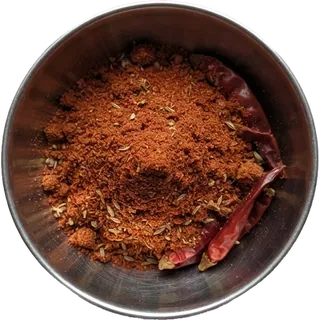
Sugar bean curry comes from Durban's Indian community, many descended from indentured labourers brought from India by British colonial authorities after 1860 to work the Natal sugar cane fields, a history the bean's own name echoes by coincidence. Cooks fry onion in oil, stir in Durban masala — a dry curry blend sharper with chilli than its Cape or Johannesburg counterparts — then add tomato, potato and soaked sugar beans, simmering until the gravy turns thick and dark red. It fills half of every bunny chow order and stands on its own as a Thursday special at Durban lunch counters, the day long tied to domestic workers' time off.
Beans, onion, tomato, potato, oil and Durban masala are all plant. The one place an animal product can enter is the pot itself: some home cooks and a few curry houses finish the beans with ghee instead of sunflower oil, for richness, before the dish ever reaches a plate or a loaf of bread. Nothing about bunny chow service itself adds dairy or meat, so the only thing to settle is what fat went into the simmering, not what goes on top.
Where to get it
Bunny chow counters and curry houses across Durban, from the Grey Street area to suburban takeaways, with bean bunny as the standard Thursday special; a quarter loaf runs about R30 to R45.