Bunny Chow
A quarter or half loaf of white bread, hollowed out, is filled with curry and topped with the torn-out crumb. Durban takeaway counters have sold it since the mid-twentieth century, the bean version the cheapest, eaten standing at lunchtime by the city's workers.
How to order
Ngicela ibhanisi lezindumba, ngaphandle kwenyama, ngiyabonga.
Name the bean filling to skip meat altogether, since mutton and chicken bunnies dominate most counters, and check for ghee, since some kitchens stir it into the curry near the end of cooking, asking “Akukho ghee kulokhu, akunjalo?” — “There's no ghee in this, is there?” Many Durban takeaway counters run in English at the till, with isiZulu spoken mostly between staff and regular customers.
History
Bunny Chow is Durban English for a dish invented in the city's Indian community, descended largely from indentured labourers brought from India to work Natal's sugar estates from the 1860s under British colonial contract. Traders and cooks around Grey Street and the old Casbah hollowed out a loaf and ladled curry inside it, a shape that let workers carry a hot meal without a plate or cutlery and that let Black customers buy through takeaway windows during apartheid-era segregation. IsiZulu speakers call it ibhanisi, often naming the bean version ibhanisi lezindumba.
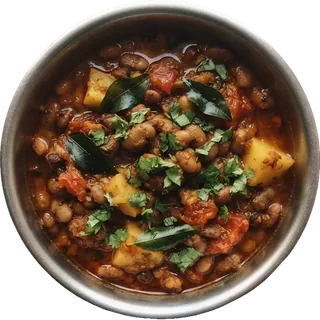
The sugar bean curry at the centre of a bean bunny is onion, tomato, chilli and curry spice cooked in oil with izindumba, the Zulu word for sugar beans — all plant. Animal product enters at the counter itself: mutton and chicken bunnies outsell the bean version at most takeaways, and some kitchens finish any curry, bean included, with a spoon of ghee stirred in near the end of cooking. What has to be settled, then, is both the filling and whether ghee went into that particular pot.
Where to get it
Durban takeaway counters and curry houses, particularly around the central business district and the old Grey Street precinct, serving through lunch and into the evening. A quarter bean bunny costs a fraction of the meat versions, commonly under R40.