Mango Atchar
Green, unripe mango is shredded or cut into chunks, salted, then worked with chilli powder, fenugreek seed and oil until it cures soft and fiery. Durban's Indian households jar it for the pantry, and Johannesburg's kota stands spoon it straight into the bread.
How to order
Ngicela i-atchar yamango, ngiyabonga.
Atchar made from mango, salt, chilli, fenugreek and oil needs no checking, since no animal product enters the pot at any stage. What has to be asked after is whether it comes inside a bunny chow or kota built on meat, cheese or egg — “Ngicela i-atchar yamango kuphela, ngaphandle kwenyama,” mango atchar only, without meat. Most Durban and Johannesburg counters run that exchange in English rather than isiZulu.
History
Mango Atchar carries its name in South African English; the pickle itself is called 'atchar' across the country's Indian communities, descendants of indentured labourers brought from India to Natal's sugar estates by British recruiters from 1860 onward — indenture, not free migration. Afrikaans keeps the same pickle as 'atjar.' In Durban, households shred green mango each winter, when the fruit is still hard and sour, salting it to draw out water before working in chilli and fenugreek. Traders and migrant workers carried it inland, and it now rides beside bunny chow in Durban and inside kota sold from containers in Soweto and Alexandra.
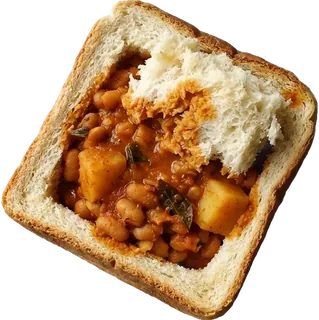
Mango, salt, chilli powder, fenugreek seed and oil are everything that goes into the jar; no animal product enters the pickle at any stage of grating, salting or curing. The question sits one step away, in whatever the atchar is spooned onto: a bunny chow built on mutton or bean curry, a kota layered with polony, cheese and egg. The atchar itself needs no checking. What needs checking is the bread it rides on, and at most Durban and Johannesburg counters that conversation happens in English rather than isiZulu.
Where to get it
Indian grocers and spice shops around Durban's Victoria Street Market sell mango atchar by the jar year-round, cheapest in winter when green mango is in season; kota stands in Soweto, Alexandra and other Johannesburg townships spoon it on for free with an order, most trading from late morning through the afternoon.