Wenshan Baozhong
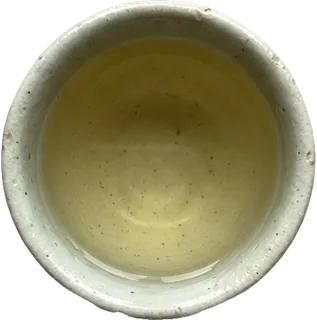
The most lightly oxidised of Taiwan's partly fermented teas, rolled into loose dark-green strips rather than balls. Grown and made in Pinglin in New Taipei, it brews pale yellow-green with a flowery smell and little astringency.
How to order
老闆,來一壺文山包種茶。
Pure leaf tea, so there is nothing animal to ask about; if a shop offers it as a milk tea or a latte, ask for it plain with 「原味的就好」, meaning 'just the plain one'.
History
Baozhong was first a scented tea, leaves sent to Fujian to be laid with flowers and wrapped in square paper packets. From 1885 Wang Shuijin and Wei Jingshi worked on tea at Dakeng in Nangang, and by about 1912 had a method that produced a flowery smell from withering and stirring alone, with no flowers added. Training courses in the 1920s spread it through the hills then administered as Wenshan county, which gave the tea its name. Pinglin is now the largest producing district: qingxin oolong and Taicha no. 12 picked as a bud with two or three leaves, oxidised only about eight to fifteen per cent, pan fired, rolled, broken up and dried.
Baozhong is leaves and water and nothing else. The flowery aroma that the name once meant literally is now produced inside the leaf during withering and stirring, so not even a flower is added, let alone anything from an animal; the sweetness and the soft mouthfeel come from light oxidation and light roasting. Growers in Pinglin sell the leaf loose by weight and shops brew it plain. The only confusions are modern: the creamy note in Taicha no. 12, called jinxuan, is a property of the cultivar rather than dairy, and bottled or shop-made baozhong lattes do contain milk.
Where to get it
Tea shops along Pinglin Old Street around Baoping Temple, the Pinglin Tea Museum at 19-1 Shuisongqikeng in Shuide village, and the farmers' association's tea culture hall in Pinglin, which also sells the district's leaf; spring and winter are the best harvests.