Zeljanica
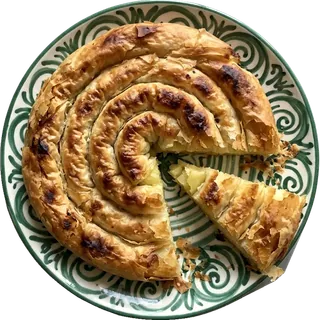
A coil of paper-thin filo filled with chard or spinach and onion, sold by the slice at Vienna's Balkan bakeries and eaten hot from the paper.
How to order
Eine Zeljanica, bitte — ist sie ohne Käse und mit Öl gemacht?
Ask for zeljanica (greens) or krompiruša (potato) rather than burek, and check whether the filling contains cheese or egg and whether the pastry is brushed with oil or butter.
History
The pastry is an Ottoman inheritance that settled across the Balkans centuries ago, and its names are precise: in Bosnia burek means the one with meat, sirnica is cheese, krompiruša potato, and zeljanica the one filled with chard, spinach or other leaf greens. All of them together are pita.
It reached Vienna with the labour migration that began with the recruitment agreement with Yugoslavia in 1966 — around 50,000 Yugoslav citizens lived in the city by the early 1970s, some 75,000 by 1973 — and the bakeries that came with those families are now an ordinary part of the street in districts like Rudolfsheim-Fünfhaus and Ottakring. Viennese counters often sell all four fillings loosely as Burek, which is why the Bosnian name is the thing to say.
Greens, onion, oil and filo are the whole filling, so this is the version to ask for alongside the potato one. Two things vary: some bakers brush the pastry with butter instead of oil, and some add egg, cheese or yoghurt to bind the greens. The cup of drinking yoghurt served with it is easy to decline.
Where to get it
Balkan bakeries across Vienna, especially in the 15th, 16th and 10th districts, from early morning.