አብሽ (Abish)
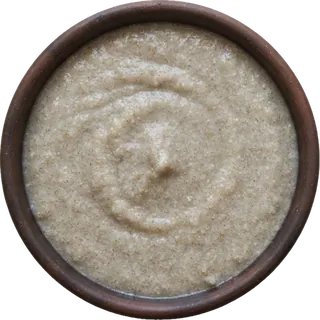
Fenugreek seeds, ground fine and soaked in water until the liquid turns bitter and yellow-green, the grounds left to settle at the bottom of the jar. The clear liquid above is poured off and drunk, usually alongside bread, as a stomach remedy and a morning drink in Amhara households and market stalls.
How to order
እባክዎ አንድ አብሽ ይስጡኝ፣ ያለ ስኳር።
The sale runs in Amharic at market stalls and roadside spots across the Amhara region. There is no animal product to settle, since the drink is seed and water only; the single point worth raising with the vendor is sugar, covered by asking for it “ያለ ስኳር” (yale sikwar), without sugar.
History
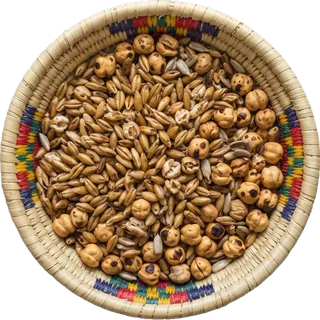
Abish is the Amharic name for fenugreek, Trigonella foenum-graecum, and by extension for this drink made from its ground seed. It is prepared across the Amhara region, from Gondar and Bahir Dar to Lalibela and the smaller towns of the highlands, most often at home by the household cook but also sold by vendors near markets and bus stations. The seed is roasted lightly or used raw, pounded or milled to a coarse powder, then stirred into water and left to stand for several hours or overnight so the grit sinks and the liquid above clears to a bitter yellow-green. That liquid is strained or simply poured off the settled grounds and served in a cup or glass, often with a piece of bread on the side.
The drink is entirely plant: fenugreek seed and water, with nothing else required to make it and nothing animal involved at any stage of soaking or settling. It falls outside the Orthodox Tewahedo fasting calendar altogether, since there is no cooking fat, dairy or egg in the recipe to begin with, fasting day or not. Vendors occasionally stir in sugar for taste, which is the one thing worth settling before paying, but there is no animal-product question to raise at all.
Where to get it
Market stalls, bus-station kiosks and household kitchens across Amhara towns including Gondar, Bahir Dar and Lalibela, sold year-round by the cup for roughly 5 to 15 ETB.