ቆሎ (Kolo)
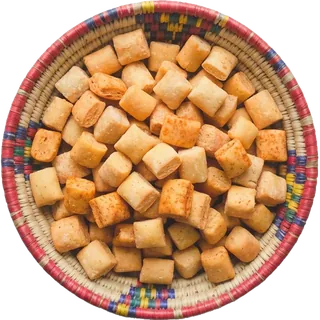
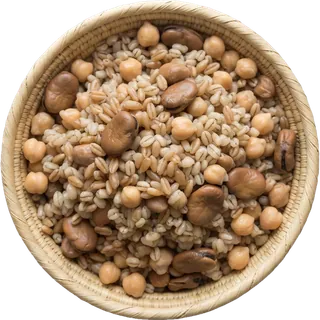
Barley grains, chickpeas, and sunflower or safflower seeds roasted dry on a flat clay griddle (mitad) until the grains crack and brown, no oil or water added. Vendors twist it into paper cones and sell it at bus stations and market stalls across Amhara and Oromia, where it is handed round with coffee at the coffee ceremony.
How to order
አንድ ኮን ቆሎ ይስጡኝ እባክዎ።
The sale runs in Amharic in Amhara towns and in Afaan Oromoo in Oromia, where the same snack is asked for as akaayii; a polite “እባክዎ” (please) is all the courtesy a vendor expects. Nothing about the recipe needs settling, since no animal product enters kolo at the roasting stage or at the table, on fasting days or any other.
History
Kolo is the Amharic name for this roasted grain mix, from the central highlands of Amhara and the plateaus of Oromia, where it is called akaayii in Afaan Oromoo. Smallholder farmers grow the barley, chickpeas, and sunflower or safflower seeds that go into it, and households roast their own supply on a clay griddle over wood or charcoal, shaking the grains until they crack and darken. Street vendors twist roasted batches into paper cones and sell them at bus stations, outside churches and mosques, and at market stalls in towns such as Bahir Dar, Gondar, and Adama. It is served alongside coffee at the coffee ceremony and carried loose in pockets or bags for a journey.
What goes into the pan is entirely plant: barley, chickpeas, sunflower or safflower seeds, and salt, dry-roasted with no butter, milk, or fat of any kind, on days of fasting and on any other day alike. No animal product enters at the roasting stage or afterward; unlike many Ethiopian snacks, nothing is brushed on or added once the grain reaches the eater. There is accordingly nothing to settle when buying kolo, since the recipe does not vary by season, religious observance, or vendor.
Where to get it
Street vendors and market stalls sell it year-round in towns such as Bahir Dar and Gondar in Amhara, and Adama and Jimma in Oromia, in paper cones for roughly 5 to 15 birr; households roast fresh batches after the barley and chickpea harvest from November.