ሽምብራ አሳ (Shimbra Asa)
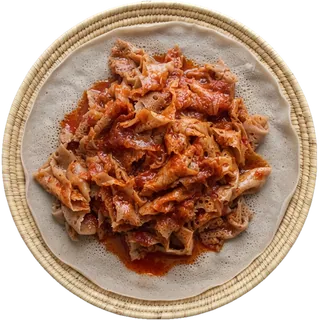
Chickpea flour is kneaded into a stiff dough, shaped by hand into small fish, and dropped into a berbere sauce built on onion, garlic and oil. The dish is made in Gondar for the Orthodox Tewahedo fasting calendar, when fish itself is set aside along with all other animal food. It is sold at fasting-season stalls and in home kitchens, alongside injera.
How to order
እባክዎ አንድ ሽምብራ አሳ ይስጡኝ፣ የጾም ይሁን።
The sale runs in Amharic in Gondar's markets and fasting-food stalls. The phrase “የጾም ይሁን” (yetsom yihun), 'let it be the fasting version,' confirms oil rather than niter kibbeh went into the sauce. If the pot was started that morning on a non-fasting day, asking at the counter changes nothing, since the butter is already mixed in; buying during Abiy Tsom or on a fasting Wednesday or Friday removes the question entirely.
History
Shimbra asa — 'chickpea fish' in Amharic, from shimbra, chickpea, and asa, fish — is made in Gondar, in the Amhara region. Cooks mix chickpea flour with water into a stiff dough, pinch off portions and shape them by hand into small fish, then simmer them in a sauce of berbere, onion, garlic and oil until the dough firms and takes on the red color of the sauce. It is a dish of the Orthodox Tewahedo fasting calendar, made in home kitchens and sold at market stalls and fasting-food counters during Abiy Tsom, the Lenten fast, and on the fasting Wednesdays and Fridays that fall through the rest of the year.
Everything in the pot is plant: chickpea flour, berbere, onion, garlic, oil and water. No butter, meat stock or egg enters at any stage, since the dish exists specifically to be cooked on days when the fast forbids them, and fish along with them. The one thing to settle is the calendar: outside Abiy Tsom and the fasting Wednesdays and Fridays, some cooks switch the oil for niter kibbeh, spiced butter, and the dish stops being a fasting food. Asking at the point of sale fixes nothing if the sauce was started that morning with butter already in it; the safer course is to buy it during a fasting period, when the oil-based version is the only one made.
Where to get it
Markets and fasting-food stalls in Gondar city sell it during Abiy Tsom, the Lenten fast running roughly from late February to Easter, and on fasting Wednesdays and Fridays through the rest of the year, for about 30 to 60 birr a plate.