ድንች አልጫ (Denich Alicha)
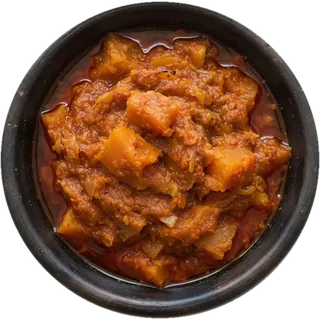
ድንች አልጫ (denich alicha) is a mild stew of potato and carrot cubes simmered with onion, garlic and turmeric, left without chilli so the dish reads pale yellow rather than red. Cooks across Amhara towns serve it as one compartment on the fasting platter, alongside shiro and greens, sold at household kitchens and at restaurants that keep the Wednesday and Friday fast.
How to order
እባክዎ፣ የጾም ይሁን፣ አንድ ድንች አልጫ ይስጡኝ።
Settling the fat is the whole transaction: asking for “የጾም” (ye’tsom), the fasting version, or “ያለ ቅቤ” (yale kibe), without butter, tells the cook to use oil instead of niter kibbeh. The sale runs in Amharic, both in household kitchens and at restaurant counters across Amhara towns. During Wednesday, Friday and the long fasts the kitchen is already cooking in oil, so no request is needed that day.
History
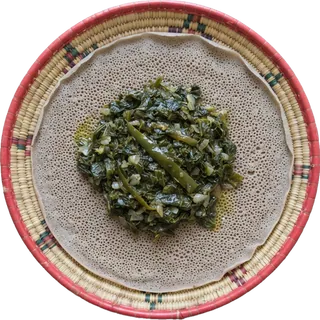
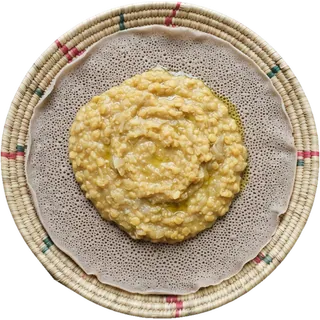
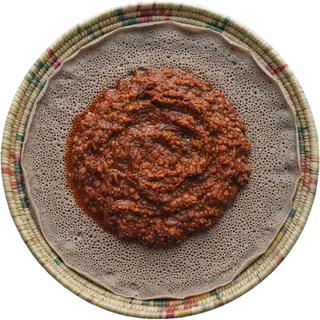
Denich is the Amharic word for potato, and alicha names the style of stew cooked without chilli or berbere, built instead on turmeric and a slow-cooked onion base. The dish is made across the Amhara region, from Bahir Dar and Gondar to Dessie and Debre Markos, in household kitchens and in restaurants that set out the fasting platter, beyaynetu. Cooks peel and cube potato and carrot, sauté chopped onion and garlic in fat until soft, stir in turmeric for colour, then add the vegetables with water and simmer until the potato softens and thickens the sauce. It is sold by the plate at lunch counters and set alongside shiro wat, gomen and injera on the communal platter.
Potato, carrot, onion, garlic and turmeric are all plant. The only animal product at issue is the cooking fat: on Wednesdays, Fridays and through the Orthodox Tewahedo fasting periods the stew is made in vegetable oil, and on other days the same pot is often built on niter kibbeh, spiced clarified butter, worked into the onion at the sauté stage before the vegetables go in. Because the fat is cooked into the base rather than added at the table, asking after the pot is already simmering changes nothing; it has to be settled with the cook before the stew is started, or simply ordered on a fasting day, when the kitchen is already running on oil.
Where to get it
Household kitchens and lunch restaurants across the Amhara region — Bahir Dar, Gondar, Dessie, Debre Markos and Lalibela — serve it year-round as part of the beyaynetu platter, for roughly 60-120 birr a plate depending on the number of side dishes.