Biji
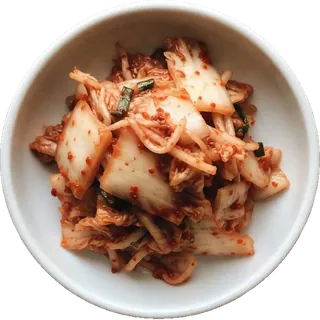
Soy pulp left over from pressing tofu is simmered with kimchi, water and gochugaru until it thickens into a coarse, speckled stew. It was once given away free at neighborhood tofu shops wrapped in newspaper, and still turns up as a winter lunch in Seoul's older markets and in Chungcheongnam-do farmhouses.
How to order
비지찌개 돼지고기 빼고 주세요.
Ask the cook to hold the pork belly with “돼지고기 빼고 주세요” before the stew goes on the stove, since it's fried into the broth early and can't be fished out once simmered. The kimchi's jeotgal, worked into the paste at the kimjang months before, usually can't be addressed at the table at all, so whether the dish is fully plant-based depends on which batch of kimchi the kitchen is using that day.
History
Biji (비지) is the pulp left in the cotton cloth after soybean milk is pressed for tofu, made daily at tofu shops (dubu-jip) that once gave it away free to anyone who asked, since the pulp had no sale value once the curd was lifted out. Cooked down with kimchi, water and chilli powder into a thick, grainy stew, it fed households through the scarcity of the postwar years and remained common through Korea's rapid industrialisation, when little went to waste in a poor kitchen. It is still made in Seoul's older markets and in the farming towns of Chungcheongnam-do, eaten as an everyday winter lunch rather than a festival dish.
The stew's own base is soy pulp, kimchi and water, but most cooks fry diced pork belly in the pot before the biji and kimchi go in, building the stock the rest is simmered in, and once that happens it cannot be picked back out. The kimchi itself usually carries jeotgal, salted shrimp or anchovy, worked into the paste at the kimjang and fermented in, which settles the question before the pot is ever on the stove. Egg does not appear here, and no separate anchovy stock is used, so the two points to ask about are the pork in the frying pan and the jeotgal already in the kimchi.
Where to get it
Tofu-shop restaurants (dubu-jip) in Seoul's Mangwon Market and Majang-dong, and farmhouse kitchens in Chungcheongnam-do's Nonsan and Hongseong, serve it as a winter lunch, typically 7,000-9,000 won a bowl.