Burgenländischer Krautstrudel
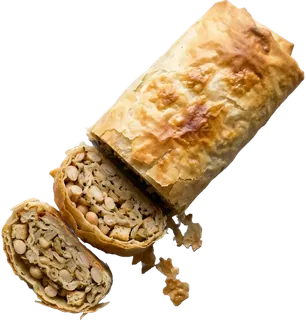
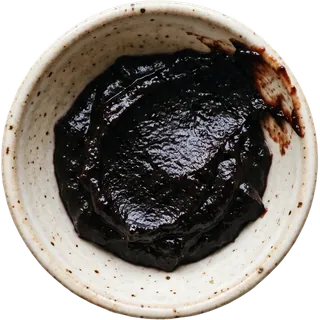
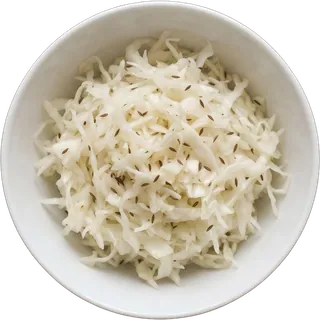
White cabbage salted, caramelised dark with sugar and onion and seasoned with caraway, rolled in thin strudel dough and baked crisp.
How to order
Geht der Krautstrudel ohne Speck, in Öl geröstet und ohne Ei bestrichen – und ohne Rahm dazu?
Ask for the cabbage roasted in oil without bacon, the strudel brushed with oil rather than egg, and served plain instead of with salted sour cream.
History
The Krautstrudel is a fixed part of Burgenland cooking, eaten warm or cold, with sauce or without, at any time of year. It belongs to the same household repertoire as the bean and apple strudels: one batch of pulled dough, four strudels, whatever the cellar has. Burgenland cooks shred the cabbage, salt it and let it stand half an hour to draw water, caramelise sugar with onion, then cook the cabbage down with caraway, marjoram, pepper and a splash of vinegar until it takes colour but keeps bite.
Cabbage, paprika, onion and garlic are also where Croatian influence shows in Burgenland cooking, and the Seewinkel has its own method: in some villages the strudel is coiled like a snail into a Reindl and cooked covered on the stove plate, turned once, rather than baked on a tray. The cabbage itself is the eastern Austrian winter vegetable par excellence, and the same filling turns up in Hungary, Slovakia and Croatia.
The filling needs cabbage, onion, sugar, caraway, salt and pepper — nothing else. Several published versions, including the one from the Schmankerl Wirte Burgenland association, list bacon as explicitly optional and the fat as Schmalz, oil or butter interchangeably. What has to be requested is oil rather than lard or Butterschmalz, no bacon in the pan, no egg wash on the roll and no sour cream served with it.
Where to get it
Gasthäuser, Heurige and Buschenschänken throughout Burgenland year-round; bakeries around the Neusiedler See sell it by the slice.