Byrek me Kungull
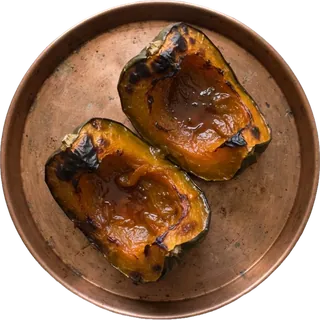
Winter squash is grated, salted, and wrung dry before going between thin pastry sheets with a spoonful of sugar or none at all, then baked in a round tray. It is a cold-weather pie from the northern highlands, made from the autumn squash stored for winter, in Shkodër and Kukës.
How to order
Një copë byrek me kungull, pa gjalpë dhe me vaj, ju lutem.
Byrek me kungull is usually brushed with gjalpë between the sheets as it goes into the tray, so ask ahead rather than after it comes out of the oven: “A e bëni me vaj ulliri, pa gjalpë?” If the tray is already assembled and baked, the butter is already in and cannot be asked out at the counter.
History
Byrek me kungull belongs to the highland kitchens of Shkodër and Kukës, where squash from the autumn zahire is kept in dry storage through winter and grated into pastry as the cold months wear on. Sheets are rolled thin by hand and layered in a round tray with the squash and a little sugar, baked under embers or in a wood oven. It is a dish for the second half of winter, when fresh vegetables are gone and stored squash is what the pantry still holds; rural depopulation since the 1990s has left fewer households keeping a winter zahire at all.
The filling itself is plant-based throughout: grated squash, salt, and sugar or none, with nothing else added. What has to be settled is the layering fat — most kitchens in Shkodër and Kukës brush gjalpë between the pastry sheets rather than oil, since butter is what gives the sheets their colour and crackle in a wood oven. Ask for vaj instead, and the dish stands as a squash and pastry pie with no animal product at all.
Where to get it
Bakeries and home kitchens across Shkodër and Kukës, especially in Shkodër city and Kukës town, from late autumn once the squash is in store through the end of winter; a slice at a neighbourhood furrë runs 50-80 lekë.