Leçenik
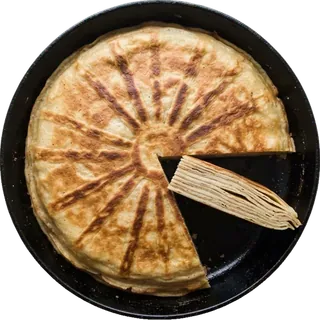
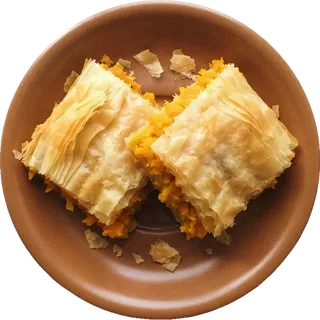
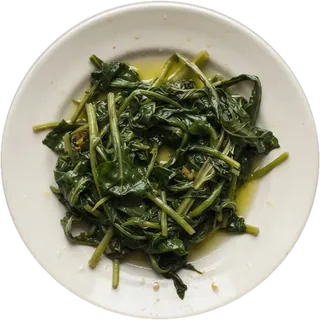
A flat round bread of cornmeal worked through with chopped leek or wild greens, baked under a domed lid buried in hot embers and cut into wedges straight from the pan. It is eaten as daily bread rather than a special dish, in the highland villages of Korçë and above Shkodër.
How to order
Një copë leçenik pa gjalpë, ju lutem.
Ask before the dough is mixed, since gjalpë or ajkë worked into the batter cannot be taken out once the bread is baked. Say “pa gjalpë, ju lutem” (without butter, please) when you order, and at a village bakery or stall ask which tray was made plain that morning.
History
Leçenik belongs to the maize-growing highlands, where corn, established under Ottoman rule, outgrew wheat on poor mountain soil and became the grain of daily bread. Women in the villages around Korçë and above Shkodër worked chopped leek or whatever greens the season gave - nettle in spring, cabbage later - into cornmeal and water, baking the flat loaf under a sac buried in the hearth embers. It was not kept for guests; it was baked most mornings and eaten with milk or beans. In the Shkodër highlands it is called krelan misri, and emigration since the 1990s has emptied many of the villages that once baked it daily.
The batter itself is maize flour, chopped greens, water and salt, plant-based without adjustment. Richness comes from gjalpë or ajkë worked into that batter before it goes into the sac, a step some households take and others skip depending on what the larder holds that week; because it is mixed in rather than spread on top, it cannot be picked out of a finished loaf. What has to be settled is whether that spoonful went in before baking, and the only way to know is to ask the person mixing the dough, not the one serving the slice.
Where to get it
Home kitchens and village bakeries in the highlands around Korçë and Devoll, and in the Dukagjin villages above Shkodër, more often baked at home than sold; where a bakery or market stall does sell it, a wedge runs 50-80 lekë.