Flija
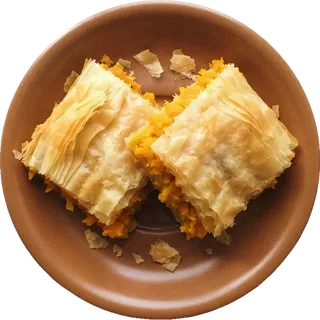
Thin batter is ladled in rings into a pan under a saç, an iron dome heaped with embers, one layer set before the next, for two hours, until it is built up like a wheel. It is cooked in the highland villages of Kukës and Shkodër for guests and family gatherings, not an everyday meal.
How to order
Një copë flija pa ajkë e pa kos, ju lutem.
The ajkë or gjalpë is brushed on while the rings are still going onto the saç, so it has to be settled before the cook starts, not after — say “Pa ajkë, ju lutem, me vaj.” The kos or mjaltë only arrives at the table and is easy to wave off with “Pa kos, ju lutem.”
History
Flija belongs to the northern highlands — Kukës, Has and Tropojë, and the Malësi e Madhe villages above Shkodër — where households keep a saç for it still. The cook ladles batter through the dome's vent in a thin ring, lifts the lid to oil each set layer, and returns it to the embers, building thirty-odd rings into a dome the size of a cartwheel over two hours. It is cooked for guests, weddings and name days rather than daily meals, since it ties one person to the hearth the whole time; rural depopulation since the 1990s has left fewer households with the saç and the patience for it.
The batter itself is plant-based throughout: flour, water, salt and oil, nothing else goes into it. What turns the dish animal is the fat brushed on between layers — ajkë (clotted cream) or gjalpë (butter) — applied by hand as each ring sets, and the kos (yogurt) or mjaltë (honey) spooned over it at the table. The brushing happens during the two-hour cooking itself, so it must be settled with the cook before the first layer goes on, not after; the topping can simply be left off or asked for without at the table.
Where to get it
Family kitchens and small lokal restaurants in Kukës, Has and Tropojë, and in the Malësi e Madhe villages of Shkodër qark, usually made to order for weddings or name days; agrotourism guesthouses in the highlands serve it by the portion for 400-600 lekë.