Chancho en Piedra
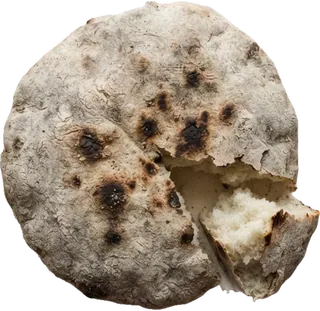
Tomato, garlic and green chili are crushed together in a stone mortar and pestle until chunky, never diced with a knife — the pounding method, not pork, gives the dish its name. It is served as a starter with bread before asado in rural kitchens of the Maule and Ñuble regions.
How to order
¿Me trae un chancho en piedra con pan, por favor?
Nothing needs to be cleared with the kitchen: chancho en piedra is tomato, garlic, chili, oil and salt, with no meat, stock or lard in the base, so it arrives plant-based as a matter of course. If extra heat is wanted, the phrase is ““más picante, por favor””.
History
Chancho en piedra carries a Chilean Spanish name that misleads: it has nothing to do with pork. Tomato, garlic and chili are pounded, not chopped, in a stone mortar called a piedra, and that crushing method is what gives the dish its name. It is made in home kitchens and roadside picadas across the Maule region, centred on Talca, where a monument to the dish stands in the plaza, and in neighbouring Ñuble. Set on the table before an asado or alongside bread and cheese, it is a fixture of central Chilean campo cooking rather than a dish tied to one feast day.
The dish is plant from start to finish: tomato, garlic and chili pounded together in the mortar with oil and salt, nothing else added. No animal product enters in the kitchen or at the table, since the mixture is not built on a meat stock or lard base the way some Chilean sauces are. The only thing to settle, if anything, is how much chili goes in, since cooks vary the heat to taste rather than following a fixed recipe.
Where to get it
Roadside picadas and fondas across the Maule region, especially in and around Talca, and in Ñuble around Chillán, serve it as a starter with bread before the main order; at a restaurant it runs CLP 2,000-4,000, and it turns up heavily at September's Fiestas Patrias asados.