Tortilla de Rescoldo
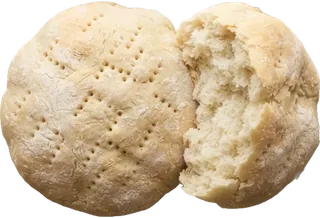
A round of wheat dough buried in the hot ash of a dying fire and raked out an hour later, its crust beaten clean with a cloth before it is torn open. It is eaten at breakfast and onces in campo households across Maule, Ñuble and Araucanía, split open and spread with butter or jam.
How to order
¿Me regala una tortilla de rescoldo, porfa?
Ask whether the dough was made with manteca or mantequilla, since many bakers work one in for a richer crumb: “¿La tortilla tiene manteca o mantequilla?” Roadside stalls and campo bakeries across Maule, Ñuble and Araucanía run the counter in Spanish, so the question lands the same way everywhere.
History
Tortilla de rescoldo takes its name from the rescoldo, the bed of hot ash and embers left at the bottom of a wood-fired kitchen stove or an outdoor fire once the flames have died down. The dough is buried directly in that ash, covered over, and raked out again after about an hour, its crust beaten clean with a cloth before it is torn open. It is baked in campo kitchens and roadside stalls across Maule, Ñuble and Araucanía, where wheat farming spread after Spanish colonization displaced Mapuche communities from the best land during the nineteenth-century occupation of Wallmapu, pushing many onto smaller plots suited to grain.
The dough is simple: wheat flour, water, salt and a leavening agent, mixed and kneaded before it goes into the ash. Many cooks work lard or butter into the dough for a richer crumb, and that happens at the mixing bowl, not at the table, so once it is in the embers there is no separating it out. A plain dough of just flour, water and salt bakes the same way and turns up as often in campo kitchens, which makes it worth asking, before the dough is shaped, whether manteca went in.
Where to get it
Roadside stalls at highway turnoffs and campo markets across Maule, Ñuble and Araucanía, often sold still warm from the embers in the morning; a loaf runs about 800-1500 pesos.