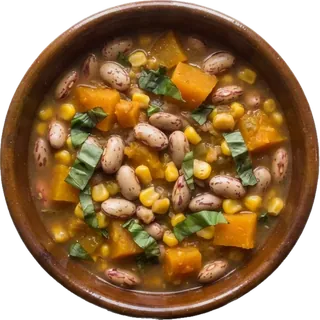
Zapallo Camote
A large storage squash with grey-green skin and dense, deep-orange flesh, grown in central Chile and cut into wedges for sale at the feria. It is boiled or mashed into charquicán and porotos granados, eaten through autumn and winter across the Metropolitan Region and Maule.
How to order
¿Me vende un pedazo de zapallo camote, porfa?
The squash itself needs no clearing, since it is sold as a plain vegetable; the question belongs to the pot it ends up in, so ask whether the charquicán or porotos granados was made with charqui, ground beef or longaniza: '¿Esto lleva carne o charqui?'
History
Zapallo camote carries a name in Quechua: zapallo comes from sapallu, Quechua's word for squash, kept in Chilean Spanish after the Inca and then Spanish empires both reached central Chile and pushed out older local vocabularies along with the land itself; camote marks the deep orange flesh for its resemblance to sweet potato. The squash is a Cucurbita maxima variety grown mainly around Maule, harvested in autumn and sold whole or quartered through winter because its thick rind keeps without refrigeration. At Santiago's ferias libres and in Maule kitchens it is the squash reached for first, the base of charquicán and porotos granados on ordinary weeknights.
Zapallo camote itself is a vegetable: squash, skin and seeds removed before the cut is weighed and sold. No animal product touches it at the market stall. It enters the kitchen's grey areas only once it goes into the pot — charquicán traditionally folds in charqui, dried and shredded beef, or today more often ground beef, stirred through the mashed squash and potato; porotos granados, built on beans, corn and squash, sometimes gets a piece of longaniza simmered in for fat and flavor. Buying the squash itself settles nothing about the finished dish, so the question to ask is what else is in the pot it's going into.
Where to get it
Ferias libres across Santiago and the towns of Maule sell it cut into wedges year-round, with the heaviest stock from the autumn harvest through winter, March to August; a wedge runs CLP 500-1,000 depending on size and season.