Sopaipillas Pasadas
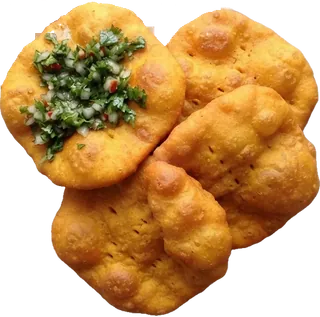
Fried discs of pumpkin dough are simmered in a syrup of melted chancaca, orange peel and cinnamon until they darken and turn soft. Santiago eats them on the first cold rain of the year, sold hot from street carts and bakery counters through winter.
How to order
¿Tiene sopaipillas pasadas sin manteca, por favor?
The dough is mixed before the cart opens, so lard is already worked in once frying starts; ask before ordering, “¿Tiene sopaipillas pasadas sin manteca, por favor?”, since some bakeries fry a separate batch with vegetable oil if asked ahead. The counter in Santiago runs in Spanish throughout.
History
Sopaipillas pasadas takes its name from Chilean Spanish, where 'pasada' means passed through or soaked. The dough — wheat flour bound with mashed pumpkin — comes from Spanish colonial cooking brought to the Captaincy General of Chile, frying technique and wheat both introduced after conquest, while chancaca, raw unrefined cane sugar, arrived through trade with Peru. In Santiago and across the central valley, the fritters are street food from May to August, cooked by vendors on braziers at bus stops and plazas the moment the first rain of the season turns cold, and eaten standing, straight from a paper cup of syrup.
The syrup itself is plant throughout: chancaca melted with water, orange peel and cinnamon sticks, simmered until thick and dark. The dough is where the question sits — traditional sopaipilla dough cuts lard into the flour and mashed pumpkin before frying, the same way a pie crust is made, and some bakeries and home cooks substitute vegetable oil or shortening instead. Because the fat is worked into the raw dough rather than added afterward, it has to be settled before the sopaipillas go into the fryer, not after they come out in syrup.
Where to get it
Street carts, bakeries and fritura stands across Santiago's Región Metropolitana, cooked over braziers from the first autumn rains through August; a serving of two or three in syrup runs CLP $800-1.500 at a street cart, more at a bakery counter.