Çiğdem Pilavı
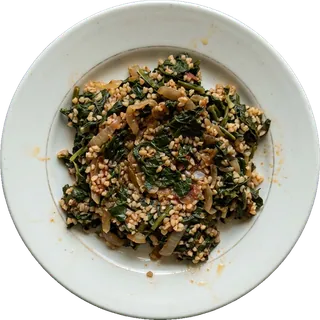
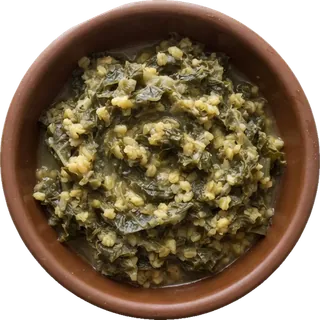
Çiğdem pilavı is bulgur cooked with the corms of wild crocus, small onion-like bulbs dug from thawing fields before the flowers open. The corms are boiled or roasted to remove bitterness, then stirred through the grain with onion and fat, producing a dense, nutty pilaf eaten as a main dish in rural Yozgat.
How to order
Etsiz ve tereyağsız çiğdem pilavı yapar mısınız, lütfen?
Çiğdem pilavı centers on wild crocus corms harvested as snow melts, combined with bulgur, but traditionally incorporates butter and sometimes minced lamb. To obtain a plant-based version, the diner requests “Etsiz ve tereyağsız çiğdem pilavı yapar mısınız, lütfen?” — specifying the removal of both meat and butter so that only the foraged crocus and grain remain.
History
Çiğdem pilavı comes from the steppe villages of Yozgat province in central Anatolia, where çiğdem, the wild crocus, pushes up through the last snow in February and March. Children and women dig the corms with small tools, gathering enough for a household pot. The corms, called çiğdem or in some villages çiğdem soğanı (crocus onion), are cleaned, parboiled to cut their bitterness, and sautéed with chopped onion before being mixed into bulgur and simmered until the grain is tender. The dish is cooked at home, rarely in restaurants, and marks the turn from winter stores to the first wild food of spring.
Everything in the pot except the fat and, in some kitchens, the meat is plant: the crocus corms, the bulgur, the onion. Butter is added at the sautéing stage and again stirred through at the end, the usual finishing fat of Anatolian pilafs; some households brown minced lamb with the onion before the corms go in, turning the dish into a meat pilaf rather than a plain one. Both additions happen in the pot during cooking, not at the table, so there is nothing to wave away afterward. Whether a given plate is plant-based has to be settled before it is cooked, by asking the cook directly what fat was used and whether meat went in.
Where to get it
Found mainly in home kitchens and village gatherings across Yozgat province, cooked in late winter and early spring when the corms can be dug; it rarely appears in restaurants or markets.