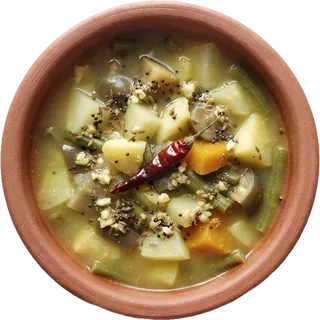
Dalma
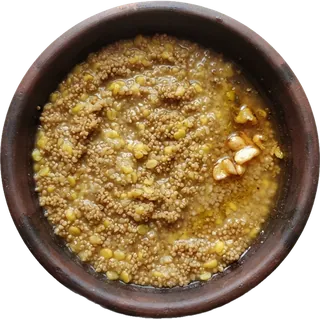
Dalma pairs toor dal with vegetables such as pumpkin, raw banana, brinjal and papaya, simmered together and finished with roasted cumin and grated coconut. It is recorded in Odia households and in the Jagannath temple kitchens of Puri, where it is served alongside rice as part of the daily meal.
How to order
ଗୋଟିଏ ପ୍ଲେଟ୍ ଡାଲମା ଦିଅନ୍ତୁ।
Ask whether ghee has been used in the tempering with ‘ଏଥିରେ ଘିଅ ଦିଆଯାଇଛି କି?’, or request it left out with ‘ଘିଅ ବିନା ଦିଅନ୍ତୁ।’।
History
Dalma is cooked in households across Odisha and in the kitchens of the Jagannath temple in Puri, where it is part of the chhappan bhoga offerings prepared for the daily rituals. The dish combines toor dal with vegetables that change with season - pumpkin, raw banana, brinjal, papaya, taro and drumstick - boiled together rather than cooked separately, then tempered with cumin, bay leaf and dried red chilli. Panchaphutana, a five-spice blend of mustard, cumin, fennel, fenugreek and nigella, is often used for the tempering. It is recorded as part of temple cooking in Puri and is eaten daily in Odia homes with rice.
The dal and vegetables in dalma are plant: toor dal, pumpkin, banana, brinjal, papaya and the spices used in the tempering have no animal content. The point where ghee enters is the tempering itself, the tadka of cumin and panchaphutana fried and poured over the cooked dal, done this way in both temple kitchens and households. Asking for the tempering to be done in oil instead removes the only animal ingredient, since nothing else in the recipe requires dairy. A diner ordering dalma should ask whether ghee was used in the tempering, since the base dish, once separated from that step, is already plant.
Where to get it
Dalma is served in Odia thali messes and household-style eateries across Puri, and distributed as part of temple bhoga near the Jagannath temple; it is also cooked daily at home with rice.