Santula
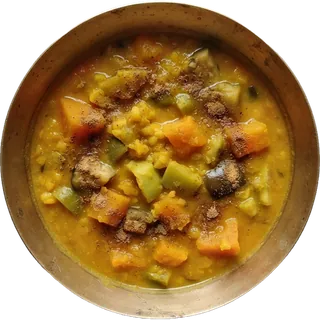
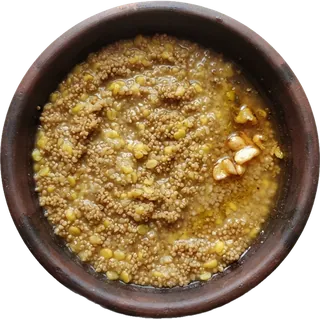
Santula brings together whatever vegetables are in season — pumpkin, potato, brinjal, beans, drumstick — boiled together in a single pot with minimal water, then finished with a tempering of mustard seed, garlic and raw mustard oil poured in at the end rather than used for frying.
How to order
ଗୋଟିଏ ପ୍ଲେଟ୍ ସନ୍ତୁଳା ଦିଅନ୍ତୁ।
Ask ‘ଏଥିରେ ଘିଅ ଦିଆଯାଇଛି କି?’ to confirm the boiled vegetables have not been finished with a spoon of ghee at the table, which some households add as an extra.
History
Santula is cooked across Odisha, from the coastal belt around Puri and Cuttack to the western districts of Bolangir and Kalahandi, as a household dish rather than a restaurant item. Cooks use whatever vegetables are on hand — pumpkin, potato, brinjal, green beans, drumstick, raw banana — cut into similar-sized pieces and boiled together in a single pot with a small amount of water, often with a pinch of turmeric. The vegetables are simmered until soft rather than fried, which keeps the dish light compared to other Odia vegetable preparations. It is recorded as a staple accompaniment to rice at midday meals, eaten alongside dal and a portion of saga (greens) in many Odia homes.
Santula contains no animal ingredient in its standard form: the vegetables are boiled in water alone, and the only fat involved is raw mustard oil, poured over or heated briefly with mustard seed and garlic for the finishing tempering. Unlike many other Odia vegetable dishes, santula is not finished with ghee, and no dairy such as curd or milk enters the recipe at any stage. The main point for a diner to check is not the vegetables or the oil but whether a cook has, outside the standard recipe, added a spoon of ghee at the table for richness, a variation some households allow but which is not part of the base dish.
Where to get it
Santula is served in home-style Odia messes and thali restaurants in Bhubaneswar and Cuttack, and appears as a side dish at Odia wedding feasts and during the Raja festival.