Dhokla
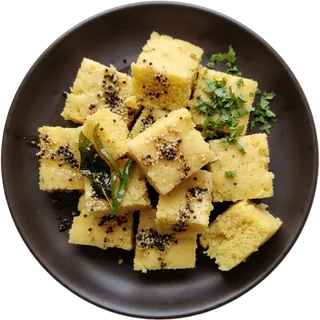
Dhokla is the steamed, spongy savoury cake of Gujarat: a pale, lightly sour square or diamond cut from a batter of rice and split gram, tempered with a hissing pan of mustard seed and curry leaf just before serving.
How to order
માફ કરશો, દહીં વગર ઢોકળું મળશે?
The standard batter is traditionally soured with curd before steaming, so it is worth confirming this directly by asking ‘આમાં દહીં કે ઘી વાપર્યું છે?’ (has curd or ghee been used in this), as stalls vary in how they prepare the soak. If the answer is uncertain, ask for khaman instead, since it is made purely from besan and leavening agents without any curd.
History
In Gujarati households dhokla is a way of putting pulses and rice to good use before a meal: the grains are soaked, ground to a batter, and left to ferment overnight on the kitchen counter, the wild yeasts and lactic bacteria turning it faintly sour and full of air before it reaches the steamer. Cut into diamonds and finished with a tempering of mustard seed, curry leaf, green chilli and a thread of sugar, it moved from home kitchens into Gujarat's street stalls and railway platforms as a breakfast and teatime staple, and from there across India as one of the subcontinent's best-known savoury snacks, documented from the late nineteenth century onward.
Whether this cake is plant-only comes down to which batter is on the steamer. The old-style, long-fermented version is soured with a spoonful of curd stirred into the batter before the overnight rest, so the animal ingredient enters right there, at the mixing stage, not in a garnish or a finishing touch. A stall or kitchen can usually be asked to leave the curd out and sour the batter instead with lemon juice, fruit salt or baking soda, since the curd's job is to kick-start fermentation, not to add flavour. Its close cousin khaman, made purely from besan (gram flour) batter soured quickly with lemon juice, fruit salt or baking soda rather than curd, contains no animal ingredient at all and is often what vendors mean when they say 'dhokla' outside Gujarat.
Where to get it
Farsan shops, street-food stalls and tea-time counters across Gujarat — especially in Ahmedabad and Surat — as well as Gujarati restaurants and sweet shops throughout India serve dhokla, usually alongside its besan cousin khaman.