Fasolia bi Zeit
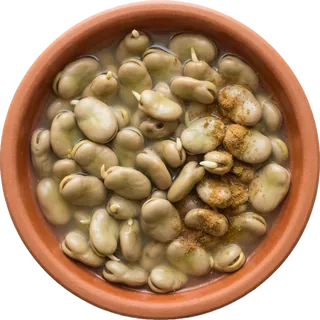
Fasolia bi zeit is white beans cooked slowly in oil with tomato, garlic and cumin, then left to cool before serving with bread, pickles and lemon. It appears on household tables and at koshary-style eateries across Cairo and the Delta as a cold or room-temperature side.
How to order
ممكن طبق فاصوليا بزيت، لو سمحت
The standard plate is already plant-based, but at carts that also serve the meat version it is worth confirming by saying ‘بزيت مش بلحمة’ (with oil, not with meat).
History
Fasolia bi zeit is documented as a standard item on Cairo and Alexandria cold-mezze and bean-shop menus through the twentieth century, sold by foul and taameya carts alongside dried-bean dishes and often prepared at home in large batches to keep for several days. Families in the Delta and Upper Egypt make it with dried white beans soaked overnight, then simmered with tomato, garlic, cumin and oil until the beans hold their shape but the sauce reduces. It is served at room temperature or chilled, not hot, which distinguishes it from the meat version fasolia bil lahma, and it travels well for workdays, picnics and Ramadan iftar tables alongside pickles and bread.
The standard recipe uses only vegetable oil, onion, garlic, tomato and dried white beans; no broth, samna or animal fat is called for in published versions of fasolia bi zeit, which is what separates it on a menu from fasolia bil lahma, the same beans cooked in meat broth with pieces of meat. Cooks who want richness sometimes finish the taqliya, the garlic-and-coriander tempering, with samna instead of oil, so a diner checking for a plant-based plate should confirm the fat used is oil (زيت) rather than سمنة. Otherwise the dish as written and sold is plant-based without substitution.
Where to get it
Sold cold by foul and taameya carts, bean shops and family-run eateries across Cairo, the Delta and Upper Egyptian towns, usually displayed alongside foul medames and taameya; also made at home in batches kept in the refrigerator for several days.