Furrundu
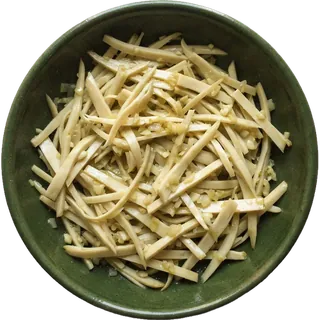
Green papaya, still unripe and firm, is grated or cut into fine threads and simmered slowly with rapadura and fresh ginger until the mixture darkens and turns sticky. The sweet is packed into glass jars and sold in Cuiabá's markets and home-kitchen stalls, eaten by the spoonful or spread on bread.
How to order
Me vê um potinho de furrundu, por favor?
Nothing needs settling before buying furrundu, since the jar is sealed and sold exactly as cooked, with no butter, milk or lard added afterward. The transaction runs in Portuguese; the only real choice is the jar size, asking for a “potinho” for a small jar or “um pote grande” for a bigger one. Vendors at Cuiabá's markets sell it by weight or by the jar, so naming a size is the practical part of the order.
History
Furrundu is a Portuguese word used in Mato Grosso for a sweet made from green papaya, cooked in the capital, Cuiabá, and in towns across the Cuiabá river basin. Home cooks and small producers cut the unripe fruit into fine threads, then simmer it for hours in a heavy pot with rapadura and ginger, stirring as the liquid reduces until the mixture turns dark brown and takes on a sticky, jam-like set. It is ladled hot into glass jars, sealed, and sold in Cuiabá's covered markets, at roadside stalls, and in small grocery shops, available through the year since green papaya is harvested continuously. The sweet is also spelled furundu.
The pot holds only plant matter: green papaya, rapadura (unrefined whole-cane sugar pressed into blocks, not bone-char refined), and ginger, cooked down with no addition of milk, butter, egg, lard, honey or gelatin at any stage. Nothing animal enters during cooking and nothing is added at the table or by the vendor afterward, since the finished sweet is sealed into its jar before sale. There is accordingly nothing to settle when buying furrundu: the recipe is fixed before it reaches the market, and asking a vendor changes nothing because the jar was filled hours or days earlier.
Where to get it
Sold in small glass jars at Cuiabá's covered markets, including the Mercado do Porto, at roadside stalls on the roads out of the city, and in grocery shops across Mato Grosso, available year-round for roughly R$15 to R$25 a jar depending on size.