Cagaita
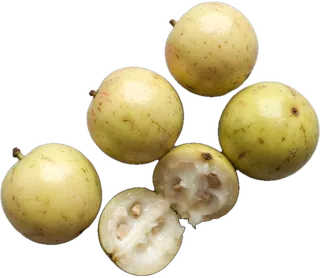
Cagaita is a pale, thin-skinned fruit of the Brazilian cerrado, picked up from the ground within hours of falling because the flesh ferments fast and turns bitter. Gatherers collect it at dawn under scattered trees in Goiás and Tocantins, selling it in plastic bags at roadside stands and town markets, or pressing it into juice and churning it into ice.
How to order
Me vê uma sacolinha de cagaita bem madura, por favor.
The transaction runs in Portuguese. Asking for it “bem madura” tells the seller to pick fruit gathered that morning, since cagaita left on the ground or in a bag for more than a day turns sour and starts to ferment. There is no animal product to settle, since the fruit, its juice and its ice are plant from gathering through to sale.
History
Cagaita entered Portuguese from Tupi and names both the cerrado tree Eugenia dysenterica and its fruit, found across Goiás and the cerrado belt of Tocantins. The tree is rarely planted; gatherers walk cerrado remnants and pasture edges at first light, collecting fruit already on the ground, since cagaita left unpicked overnight ferments and turns sour within a day. Fruiting runs from September into November, the dry weeks before the rains, and the fruit is sold the same day at roadside stands and town feiras in Goiânia, Niquelândia, Pirenópolis and Palmas, loose by the bag or pressed into juice and churned into ice.
The fruit itself is entirely plant: pulp, skin and seed, picked up from the ground and sold as gathered, with no processing step that could introduce an animal product. Juice is water, pulp and sugar; ice is the same mixture frozen; none of it passes through a stage where butter, milk, egg or stock is added. Buying cagaita, fresh, juiced or frozen, carries nothing to settle with the seller, since no version of it in the cerrado markets contains any animal product at any point.
Where to get it
Roadside stands and feiras across Goiás and Tocantins, in Goiânia, Pirenópolis, Niquelândia and Palmas, sell cagaita from September into November, loose by the bag for about R$5 to R$8, with a cup of juice running close to R$6.