Mangaba
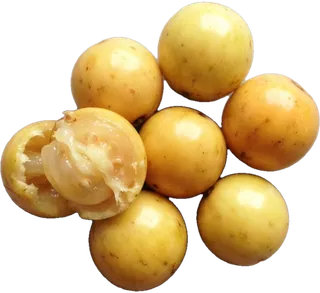
Mangaba is a soft, pale yellow fruit gathered from wild trees along the Sergipe coast and the cerrado of Tocantins, picked up from the ground at dawn once it falls ripe. Eaten whole, squeezed into juice, or churned into ice and sorbet, it is sold at roadside stands, markets, and by vendors along the beaches of Aracaju in season.
How to order
Moça, esse sorvete de mangaba é feito com leite ou só com água, por favor?
Asking whether the sorvete is “feito com leite” or “feito com água” settles it, since vendors along the Sergipe coast often sell both bases side by side in the same freezer case. The exchange runs in Portuguese everywhere mangaba is sold. Fresh fruit and plain juice need no question, since neither ever contains milk.
History
Mangaba takes its name from Tupi, usually read as close to “good fruit” or “fruit good to eat”; the tree is Hancornia speciosa. It grows wild in the restinga scrub along the coast of Sergipe and in the cerrado of Tocantins, rather than in orchards. The catadoras de mangaba, women who gather the fruit for a living, walk the sandy ground beneath the trees at dawn through the fruiting season, roughly October to January, collecting what has fallen ripe overnight, since unripe fruit is bitter and carries a white latex. The fruit is sold whole at roadside stands and municipal markets in towns such as Pirambu and Itaporanga d'Ajuda, squeezed for juice, or frozen into picolé and sorvete.
The ripe fruit itself is entirely plant: pulp, seed and skin, eaten raw or blended with water and sugar for juice, with nothing else added. Animal product enters only in the ice-cream versions, where cow's milk, and often condensed milk or cream, goes into the base before churning; a sorbet or picolé made with water instead has none. What has to be settled at the counter, then, is which base a given vendor uses, since “sorvete de mangaba” can mean either the milk-based version or a water-based one depending on the stall, and the two are not always marked apart.
Where to get it
Roadside stands and municipal markets along the Sergipe coast, in towns such as Pirambu, Itaporanga d'Ajuda and the Mercado Municipal in Aracaju, sell the fresh fruit, juice, picolé and sorvete through the fruiting season, roughly October to January, for R$ 5 to R$ 15 depending on the form.