Aberém
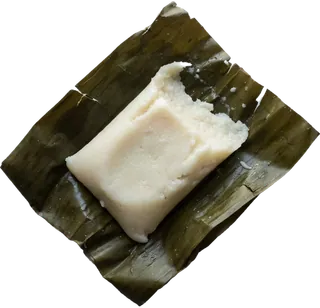
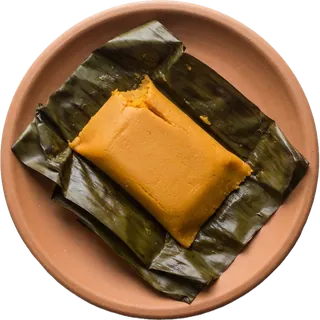
Corn or rice is ground on stone, left to soak until the starch turns faintly sour, then salted and packed into dried banana leaf before boiling. Vendors in Salvador and the Recôncavo towns sell the parcels individually, still warm, as a side to bean dishes or alone as a snack.
How to order
Me vê um aberém bem curtidinho, por favor, obrigada.
The sale runs in Portuguese at Salvador's markets and terreiro gatherings. Nothing about animal product needs confirming, since the parcel is corn or rice, water and salt from grinding to boiling. The one thing worth asking is how long the grain was left to sour, and asking for it “bem curtidinho” gets a vendor's more fermented batch rather than a milder one.
History
Aberém is a Yoruba name carried to Bahia by West Africans who were enslaved and by their descendants, who built Candomblé's terreiros in and around Salvador; the same fermented-corn parcel appears there under the related name acaçá in its unsalted, ritual form. In Salvador and in Recôncavo towns such as Cachoeira, São Félix and Santo Amaro, cooks grind dried corn or rice on stone querns, soak it in water for a day or more until it sours, drain it, salt it, and fold the paste into dried banana leaf before boiling. Street vendors and cooks attached to terreiros sell the parcels, usually still warm, at markets and feiras and outside festival gatherings.
The parcel itself is plant throughout: grain, water and salt, soured by steeping and sealed in banana leaf before cooking. No animal product enters at any point, in the pot or afterward — aberém is not finished with butter, cheese, lard or stock the way many savoury Bahian dishes are, and nothing is added once the parcel is untied. The only thing worth settling at the stall is not an animal-product question but a souring question: how long the grain sat in water, since a longer steep gives a sharper, more fermented parcel, and vendors vary on this by habit rather than recipe.
Where to get it
Feiras and market stalls in Salvador — around the Mercado Modelo and the Feira de São Joaquim — and in Recôncavo towns such as Cachoeira and Santo Amaro, sold year-round, individually wrapped, for about R$2 to R$4 a parcel.