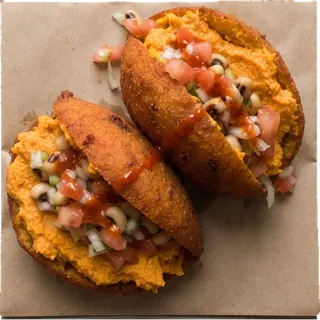
Abará
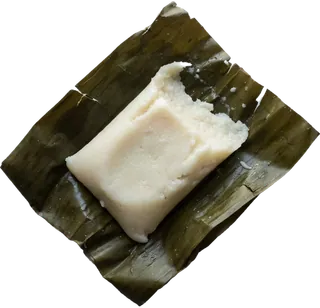
Black-eyed peas, peeled and ground into a paste, seasoned with onion and dendê oil, wrapped in banana leaf, and steamed rather than fried, the way acarajé dough is. Baianas de acarajé sell it from the same trays in Salvador, Bahia, usually as a companion to acarajé rather than on its own.
How to order
Um abará sem camarão na massa, pode ser, por favor?
The transaction runs in Portuguese. Asking the baiana “sem camarão na massa” only works if she already has a shrimp-free batch ready, since the paste is wrapped and steamed well before it reaches the stall; one already opened and shown to contain shrimp cannot be changed. Many stalls keep both versions side by side for exactly this reason.
History
Abará takes its name from Yoruba, carried to Bahia through the Afro-Brazilian religious and culinary traditions centred on Salvador. The dough is the same black-eyed pea paste used for acarajé: dried beans are soaked, rubbed by hand to loosen the skins, drained, and ground to a fine paste with onion and salt. Dendê oil is worked into the paste before it is spooned onto a square of banana leaf, folded into a parcel, tied, and steamed rather than deep-fried. Baianas de acarajé sell it from trays and stalls across Salvador — Rio Vermelho, Pelourinho, the Mercado Modelo — usually alongside acarajé, acaçá and the same fillings.
The paste itself is beans, onion, dendê oil and salt, entirely plant. Dried shrimp enters at the grinding stage: many baianas beat it directly into the paste before the parcels are folded and steamed, so by the time an abará is bought and opened, the shrimp is already fixed inside, and asking at the counter changes nothing at that point. What can be settled is upstream of that — whether the batch being sold was made with shrimp in the dough at all, since baianas commonly keep a separate shrimp-free batch on the same tray, partly for religious offerings that exclude it. Vatapá or caruru sometimes spooned over an opened abará is a separate decision, settled at the stall.
Where to get it
Street stalls run by baianas de acarajé across Salvador — Rio Vermelho, Pelourinho, the Mercado Modelo, and neighborhood feiras — sell it year-round alongside acarajé, for roughly R$6 to R$10 a piece.