Licuri
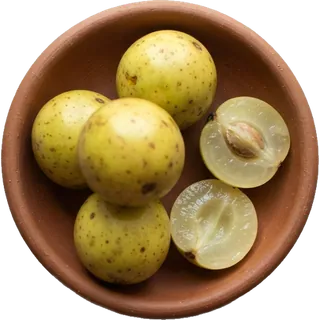
Licuri is the kernel of Syagrus coronata, a palm nut the size of a small olive, gathered from the caatinga of inland Bahia and cracked open one by one between two stones. Gatherer cooperatives sell it raw, toasted, or worked into cocada at roadside stalls and market stands across the semi-arid interior.
How to order
Essa cocada de licuri tem leite condensado ou é só coco e açúcar, por favor?
Asking “tem leite condensado?” settles the one variable in licuri, since the raw or toasted kernel needs nothing settled at all. The sale runs in Portuguese, whether at a roadside stand in Canudos or Uauá or a feira stall in Salvador. Where the cocada was already simmered with condensed milk or butter, the vendor can only confirm it, not swap it, so the question is worth asking before buying a piece, not after.
History
Licuri, from the Tupi, names both the palm Syagrus coronata and its nut, also called ouricuri in Pernambuco and nicuri in parts of Sergipe. The palm grows wild across the caatinga of inland Bahia, concentrated in the Raso da Catarina plateau around Canudos, Uauá, Euclides da Cunha and Jeremoabo. Women-led extractive cooperatives gather the fallen nuts from the ground through the dry months, then crack each one individually between a stone and a second stone or against a machete blade to free the kernel. The kernel is eaten raw, toasted in a dry pan, or grated into sweets. It is sold loose by the cooperatives at roadside stands and feira markets in those towns, and packaged for sale in Salvador markets such as the Mercado Modelo.
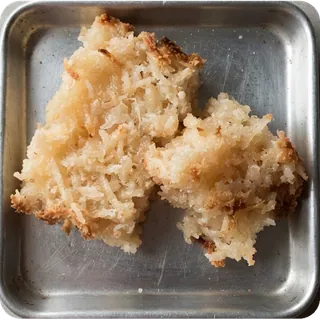
The kernel itself is entirely plant: nut, cracked shell removed, nothing added. Raw or toasted, there is nothing to ask about, since no animal product touches it at any stage. Cocada de licuri, the sweet made by simmering grated kernel with sugar and grated coconut, sometimes takes a stir of condensed milk or a spoon of butter for richness, added by some cooks partway through cooking rather than at the table. That is the one point to settle before buying: whether the batch in front of you went in with “leite condensado” or stayed with coconut milk and sugar alone. The plain nut, raw or toasted, carries no such question.
Where to get it
Roadside stands and feira markets in the Bahian interior — Canudos, Uauá, Euclides da Cunha, Jeremoabo — sell the nut loose by the bag most of the year, and stalls at Salvador's Mercado Modelo carry packaged kernels and cocada; a small bag of cracked nuts runs about R$5 to R$10, cocada squares a few reais each.