Doce de Buriti
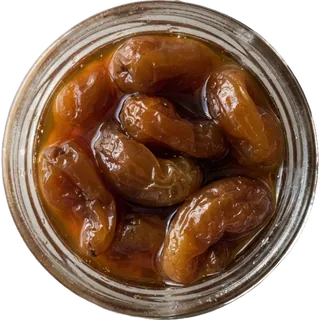
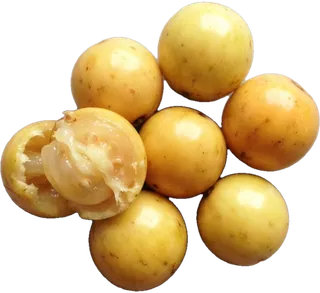
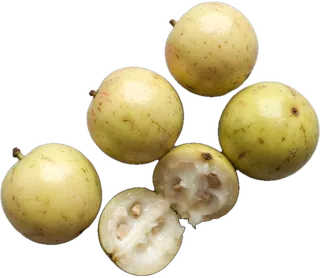
The orange pulp scraped from beneath the scaled skin of the buriti palm fruit, Mauritia flexuosa, cooked slowly with sugar until it thickens into a dense, spreadable paste. Kalunga households in the Chapada dos Veadeiros region of Goiás and cerrado communities in Piauí and Tocantins make it in large pans over wood fire, sold in jars or by the spoonful at local markets and roadside stands.
How to order
Me vê um potinho de doce de buriti, sem leite condensado, pode ser?
The transaction runs in Portuguese at every stall and market stand. Asking for it “sem leite condensado” settles the one point that varies, since some vendors stir in condensed milk to soften the set. Nothing else needs confirming, as sugar and buriti pulp are already fixed before the jar reaches the counter.
History
Doce de buriti is Portuguese; buriti itself is a Tupi word, mbyriti, used across the cerrado for the palm Mauritia flexuosa. The palm grows in dense stands called buritizais along wet veredas in Piauí, Tocantins and the Chapada dos Veadeiros in Goiás. In Cavalcante, Kalunga communities — founded by people who escaped enslavement and their descendants — harvest the ripe fruit, scald it to loosen the hard scaled skin, then scrape and sieve the orange pulp free of fiber and seed. The pulp is cooked down with sugar in wide pans over wood fire until it sets into a dense paste, sold in jars at community markets and roadside stands through the fruiting months, December to March, and further north at town markets in Picos and Teresina, Piauí.
Everything in the pot is plant: buriti pulp and sugar, cooked together until the mixture thickens and sets. No animal product enters at any stage, in cooking or at the table; the standard recipe uses no milk, butter or lard. Some vendors in town markets stir condensed milk into the paste to make a creamier confection, a variation rather than the base sweet. The one thing to confirm when buying is whether a given jar has had condensed milk added, since that is the single point where the dish can shift away from the plain pulp-and-sugar version.
Where to get it
Weekly markets in Cavalcante and the surrounding Kalunga communities of the Chapada dos Veadeiros, roadside stands along the cerrado roads of Piauí and Tocantins, and town markets in Picos and Teresina sell it in small jars during the buriti harvest, roughly December to March, for R$10–20 a pot.