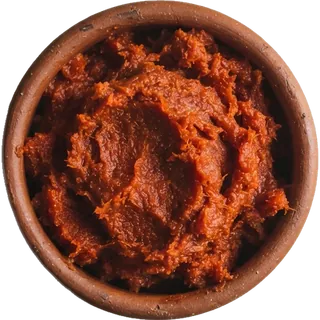
Baião de Dois
Rice and feijão-de-corda — the cowpea of the Ceará sertão, not the black bean of the south — cooked down together in one pot until the grains bind into a thick, almost porridge-like mass. The everyday plate of the Ceará interior, sold at lunch counters in Fortaleza and across inland Piauí, usually finished with queijo coalho, manteiga de garrafa and carne de sol or bacon.
How to order
Oi, pode fazer um baião de dois vegetariano, sem carne, sem queijo e sem manteiga de garrafa, por favor?
The sale and the kitchen both run in Portuguese, and because everything goes into the same pot from the start, the request has to land before cooking begins, not after. Saying “sem carne, sem queijo e sem manteiga de garrafa” covers the three usual additions, but it is worth also asking “tem caldo de galinha?” since the stock cube is stirred in and leaves no visible trace. A pot already on the stove with meat in it cannot be adjusted; a second, separate pot is the only fix at that point.
History
Baião de dois is Portuguese, roughly 'ballad of two,' naming the pairing of rice and feijão-de-corda, the cowpea grown through the sertão of Ceará and Piauí, cooked down together rather than served as separate spoonfuls. Cooks in the interior, from Fortaleza's lunch counters to small kitchens along the Piauí border, start the beans first, then add rice, queijo coalho cut into cubes, and manteiga de garrafa, a clarified butter rendered slowly and kept in bottles for months. Carne de sol or bacon often goes into the same pot at the outset. The dish is sold at midday, at roadside kitchens and comida-a-quilo counters, and keeps the name baião regardless of which meat is used.
The rice and feijão-de-corda are plant, along with the onion, garlic and coentro that season the pot. Animal product enters at the cooking stage, not the table: queijo coalho and manteiga de garrafa stirred in to bind the grains, and carne de sol or bacon added at the start to flavor the liquid the rice absorbs. Many interior kitchens also drop in a cube of caldo de galinha, chicken stock concentrate, easy to miss because it dissolves rather than sitting visibly on top. Because the meat, cheese and butter are worked in before the rice finishes, a pot already started cannot be made plant afterward — the version without them has to be ordered, or a separate pot begun, before cooking starts.
Where to get it
Lunch counters, comida-a-quilo buffets and home-style kitchens across Fortaleza and the Ceará and Piauí interior, including Teresina, sell it year-round at midday for roughly R$20–35 a plate.