Tapioca
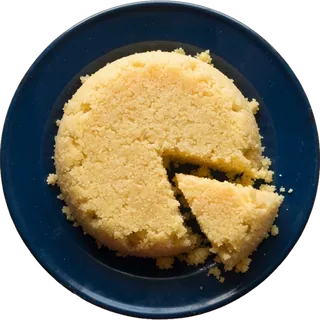
Grated, dried cassava starch sieved onto a hot flat pan until it fuses into a soft white round, then filled and folded over. Made to order at tapioqueira stands and beach kiosks in Fortaleza and Olinda, with the filling, sweet or savory, chosen before the vendor starts cooking.
How to order
Uma tapioca de coco com banana, sem queijo e sem manteiga, pode ser?
Tapioca is built to order on the hot pan, so saying “sem queijo e sem manteiga” before the vendor starts is what settles it, not after the fold. The sale runs in Portuguese at stands in Fortaleza and Olinda alike. Asking for a coconut-and-banana filling instead gives the tapioqueira a clear substitute rather than leaving a gap in the order.
History
Tapioca takes its name from the Tupi word for the starch washed out of grated manioc root, tipi'óka. In Ceará, around Fortaleza, and in Pernambuco, around Olinda, tapioqueiras, most of them women running stands at beach kiosks, street corners and open-air markets, sieve the dried, granulated cassava starch, called goma, onto a hot flat pan, pressing it with the back of a spoon until the grains fuse into one solid disk. Once the round sets and turns opaque, the vendor adds a filling and folds it over, serving it hot off the pan. The same starch, cooked the same way, is sold as beiju in other parts of the Northeast and the North.
The round itself is cassava starch and salt, heated until it sets; no animal product enters that part at any stage. Queijo coalho and butter are the two fillings tapioqueiras keep closest to hand and reach for most often, spread onto the round while it is still on the hot pan, before the fold, so this happens during cooking rather than later at the table. Grated coconut, banana and coconut milk are fillings with no animal product in them. Because each tapioca is built to order, stating the filling before the vendor starts settles the matter; nothing is pre-mixed into a batter or started hours earlier, so the request is acted on in front of the buyer.
Where to get it
Beach kiosks and tapioqueira stands along the coast in Fortaleza (Ceará) and in Olinda (Pernambuco), open year-round, morning through evening, for roughly R$8 to R$15 depending on the filling.