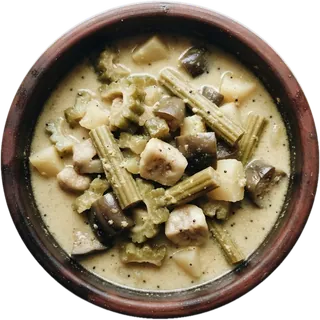
Ghugni
Dried yellow peas simmered with ginger and cumin until soft, spooned into bowls and finished with chopped onion, green chilli and tamarind water, sold from carts and stalls across West Bengal as an evening snack.
How to order
এক প্লেট ঘুগনি দিন।
Ask for the vegetarian pot rather than the mutton one, and if the vendor also tips in a spoon of ghee at the end, check with ‘এতে কি ঘি দেওয়া আছে?’ before it's served.
History
Ghugni is sold from carts and small stalls across West Bengal, on Kolkata's footpaths and in district towns such as Krishnanagar and Bardhaman, as an evening snack eaten standing at the cart or carried home in a paper cone. Dried yellow peas are soaked overnight, boiled until soft, then stewed with ginger, cumin and a little turmeric, and finished with chopped onion, green chilli and a splash of tamarind water for sourness. Vendors keep a pot simmering through the afternoon and serve it steadily through the evening rush, sometimes alongside puffed rice or with a boiled egg added on top as an extra. It is also common at railway platforms, college gates, winter fairs and Durga Puja stalls.
The vegetarian cart version of ghugni, the one sold at most footpath stalls, has nothing animal in it: the peas are cooked in oil with ginger and spices, and the onion, chilli and tamarind water added at the end are plant-based too. Some stalls and dhabas, though, keep a second pot of mutton ghugni, where pieces of goat meat are added to the pea stew and the dish is priced and listed separately on the cart's board. Because the two pots usually sit side by side, asking the vendor which one is the vegetarian pot, or asking for it «niramish», settles the question before the bowl is handed over.
Where to get it
Look for it at footpath carts and small stalls through West Bengal, especially in the evenings, at railway platforms, college-gate snack stands, and winter fairs and Durga Puja stalls where it is scooped into paper cones or bowls.