Posto Bora
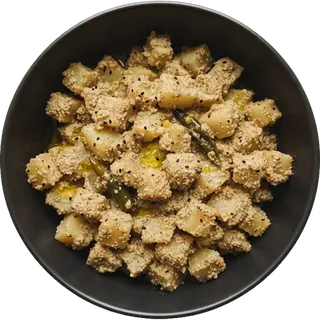
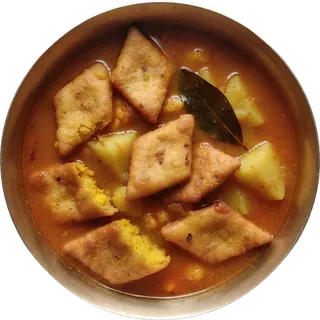
Posto bora is a Bengali patty of poppy seed ground to a paste with onion and green chilli, bound with a little flour and fried until crisp, eaten with rice and dal at the midday meal in West Bengal households.
How to order
একটা পোস্ত বড়া দিন।
Posto bora is normally fried in mustard oil with no ghee at all, but at a mess or stall it is worth asking, ‘এতে কি ঘি দেওয়া আছে?’, since the dal served alongside it is sometimes finished with a spoon of ghee.
History
Posto bora is cooked in West Bengal households, where poppy seed (posto) has been a staple ingredient since poppy cultivation expanded across Bengal and Bihar under colonial-era opium production, leaving surplus seed for the kitchen. Ground to a smooth paste with onion and green chilli, bound with a little rice flour or besan, and shaped into small flat patties, it is fried and served alongside rice, dal and a vegetable preparation at the midday meal. The dish is documented as part of Bengali bhadralok cooking, where poppy seed dishes such as alu posto and posto bata became markers of a household's everyday repertoire, eaten through the year and especially during the monsoon months when fresh produce is limited.
Posto bora carries no animal product in its standard form: ground poppy seed, onion and green chilli are bound with rice flour or besan and shaped into patties, then deep-fried in mustard oil, the fat most commonly used in Bengali kitchens for posto dishes. No ghee, curd, milk or egg enters the batter or the frying. The only point worth checking is what accompanies it on the plate: dal is sometimes finished with a spoon of ghee, and curd may be served alongside the rice at the same meal, but the patties themselves, eaten plain or with rice, are plant-based from poppy seed through to oil.
Where to get it
It is cooked at home across West Bengal and served in Bengali thali-style eateries and messes in Kolkata, usually as part of the lunch spread with rice, dal and a vegetable dish, most often during the monsoon months.