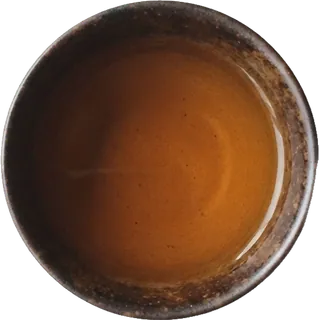
Gukeng Kafei
Arabica coffee grown on the red-earth slopes of Gukeng Township in Yunlin County, around Hebaoshan and Huashan, roasted and brewed locally. It is the oldest commercially planted coffee district in Taiwan.
How to order
老闆,一杯古坑咖啡,黑咖啡就好。
The beans and the brew are plant-based; the milk, condensed milk, cream and honey all arrive afterwards, so say 「不加奶,不加蜂蜜」 or ask 「有豆奶或燕麥奶嗎?」
History
Coffee came to Gukeng under Japanese rule, when the colonial administration trialled Arabica on several sites and found the Gukeng hills the most promising; plantings concentrated on Huashan and Hebaoshan, the latter locally nicknamed coffee mountain. By 1941 the planted area at Hebaoshan ran to some 75 hectares and most of the crop went to Japan. After the war the estates passed to provincial forestry bodies, a processing plant was built at Douliu at the end of the 1950s with American aid, and the trade then collapsed. Gukeng revived it deliberately: the township ran the first Taiwan Coffee Festival in 2003, and growers now work Huashan, Hebao, Zhanghu and Guilin.
Coffee is a seed, roasted and infused in water, so the cup is plant-based before anything is added to it. Everything that follows is where the animal ingredient arrives, and in a Taiwanese hillside cafe it arrives easily: fresh milk in a latte, condensed milk in an iced coffee, cream on top, honey offered instead of sugar, and sometimes butter or milk powder in the biscuit served alongside. Order it black, or ask for soy or oat milk, which farm cafes in the area increasingly keep. The beans themselves are not processed with anything of animal origin.
Where to get it
From the farm cafes along the Huashan hill road and around Hebaoshan in Gukeng, from growers selling roasted beans at the township's farmers' association, and at the Taiwan Coffee Festival held in Gukeng in the autumn.