Hudhra
Whole heads are left to dry through summer, then plaited by their stalks into ropes and hung in the kitchen to last the winter. Crushed raw with vinegar and walnut it makes the sauce for anything boiled — potatoes, beans, greens — and in the northern highlands it is stirred into the water poured over flija.
How to order
Na sillni pak salcë hudhre me uthull, ju lutem.
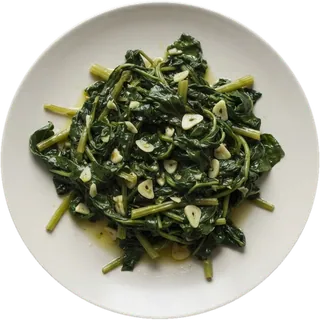
The garlic sauce itself needs no changes — it is only garlic, vinegar, salt and walnut. If it comes with flija, ask whether the layers were brushed with kajmak or butter: “A e keni pa kajmak dhe pa gjalpë?” If it dresses a boiled plate, ask for it over vegetables rather than meat: “Me perime, pa mish, ju lutem.”
History
Garlic is grown in household gardens across Albania, in the plots around Berat and in the villages that supply Tirana's produce markets, and left on the vine until the stalks dry in July and August. Growers braid the heads by those dried stalks into ropes that hang in the kitchen through the winter, part of the autumn zahire stored alongside peppers, beans and preserves. In the northern highlands, crushed garlic goes into the water ladled over flija as it comes off the fire. Through the collective-farm years of the communist period, garlic from household plots stayed one of the few crops families controlled outright.
Garlic itself raises no question — a bulb, dried and braided, with nothing added before it reaches the kitchen. The sauce made from it, crushed with vinegar, salt and walnut, is plant-based by its own recipe and needs no adjustment. What has to be checked is what the garlic is served over: the boiled dish it classically dresses may be meat as often as vegetables, and the flija it tops in the north is built from layers brushed with kajmak or butter between each one, so the garlic water changes nothing about the batter underneath.
Where to get it
Braided ropes of garlic are sold at village markets and roadside stalls through the autumn, in Berat's weekly market and at Tirana's Pazari i Ri, for 200-400 lekë a rope depending on size. The crushed sauce itself is not sold on its own — it is made to order in home kitchens and village taverns alongside whatever is boiling that day.