Trumzë
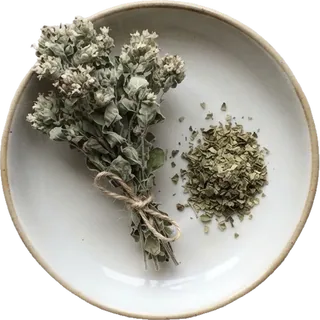
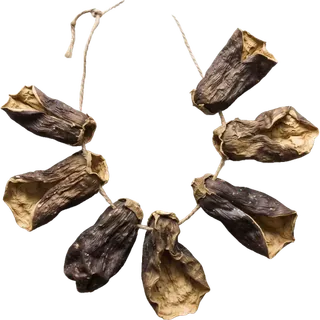
Wild thyme is cut by hand from dry limestone hillsides in June, tied in small bunches and hung to dry in kitchens and sheds through summer. Crushed over bread and olive oil or steeped as tea for a cold, it is gathered rather than grown, mostly around Gjirokastër and Berat.
How to order
Një çaj trumze, ju lutem, pa mjaltë.
The thyme itself needs no checking, since it is a dried herb with nothing added before it reaches the cup or the plate. If it's served as tea, honey is sometimes stirred in before it arrives, so ask for it by saying “pa mjaltë”; if it's crushed over bread, ask that the bread be brushed with vaj ulliri rather than gjalpë.
History
Trumzë grows wild on the dry, stony hillsides of Gjirokastër and Berat qarks, where villagers cut it by hand in June, before the summer heat turns the leaves brittle, and tie it in bunches to hang from kitchen rafters and shed beams through the year. It is never cultivated in a garden bed; gathering it is a June task alongside haymaking, done by whoever is free that week, in the villages around Gjirokastër, Tepelenë and Skrapar. Dried, it keeps through winter, when a pinch goes into hot water for a cold or is crushed straight over bread and oil at breakfast.
Trumzë itself carries no animal product in any form: it is a dried herb, cut, bunched and dried with nothing added, and it is brewed as tea or crushed over bread without need for milk, butter or cheese at any stage. The only place dairy or honey could enter is at the table, when it is a spoonful of mjaltë stirred into the tea for a cold, or a brush of gjalpë on the bread underneath it — both separate decisions made by whoever serves it, not part of the thyme.
Where to get it
Dried in bunches and sold loose by weight at open-air markets in Gjirokastër and Berat, and in village shops throughout both qarks; cut fresh in June, it is on sale year-round once dried, at 200-300 lekë for a hand-sized bunch.