Oshaf
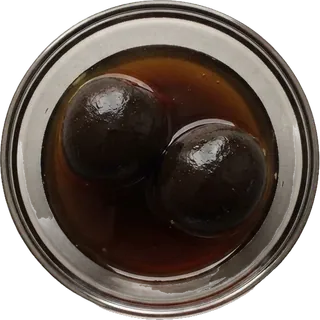
Dried figs are simmered in water and sugar until they collapse into a thick dark syrup, then cooled and served in small bowls. It is a winter dessert from Gjirokastër and Berat, eaten at iftar during Ramadan and on ordinary evenings once the autumn fruit is gone and only the zahire store remains.
How to order
Një oshaf pa qumësht, ju lutem.
The figs and syrup are already plant-based; ask for it “pa qumësht” (without milk) so the sheep's milk is never poured over at the end, since that pour only happens at serving, not in the pot.
History
Oshaf belongs to Gjirokastër and Berat, in the south, where it is made from the dried figs strung up in autumn and kept through winter in the zahire, the household store of preserved food. It is cooked across Ramadan as the dish that breaks the fast at iftar, the dried fruit standing in for fresh, and it appears too on ordinary winter evenings when the cellar holds figs and little else. In the old quarters of Gjirokastër and Berat, grandmothers still make it the way their mothers did under the monarchy and under communism, when sugar was rationed and the fig was free.
The syrup itself is plant throughout: dried figs, sugar and water, simmered down and cooled. What has to be settled is the milk: the classic version is finished with a pour of sheep's milk over the figs just before serving, added at the table rather than during the cooking, which makes it simple to leave out. Ask for the figs in their syrup alone, without the milk poured on top, and the dessert that reaches you is the one that was already cooking in the pot.
Where to get it
Home kitchens and family-run lokals in Gjirokastër's old bazaar and in Berat's Mangalem quarter, served mostly in winter and through Ramadan; a bowl in a lokal runs 100-150 lekë, though most oshaf is made at home and never sold at all.