Mesniku
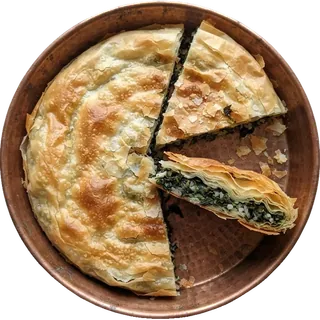
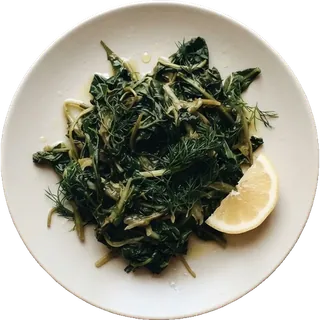
Pastry sheets rolled by hand are layered with chopped wild greens and onion, then baked under a saç with embers heaped on its domed lid. Women in the Zagori villages behind Gjirokastër make it for name days and the autumn gathering of greens, cutting it into wedges at the family table.
How to order
Një copë mesniku pa gjizë dhe pa gjalpë, ju lutem.
Mesniku is usually baked fresh in village bakeries and homes, so asking before it goes under the saç works: say “pa gjalpë dhe pa gjizë, ju lutem” and the baker brushes the sheets with oil and leaves the curd out of the filling. If you are buying a wedge already cut from a pie baked that morning, the butter and curd are already in it and cannot be removed.
History
Mesniku belongs to the Zagori villages in the hills behind Gjirokastër, made for Dita e Verës, name days, and village fairs through the autumn zahire, when the last greens are gathered before winter. Women roll the pastry sheets thin by hand, layer them with the cooked filling, and set the tray under a saç, piling embers on the domed lid so the pie bakes from above and below at once. The villages emptied through the 1990s, as families crossed the nearby border into Greece for work, leaving many of the stone houses where the saç once stood closed through winter.
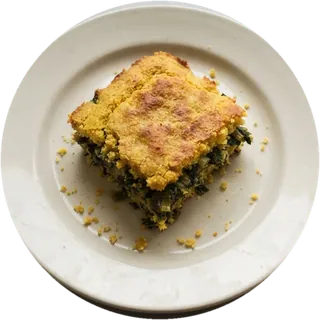
The base is plant throughout: flour and water for the sheets, wild greens and onion cooked down with oil for the filling. Most households go further, brushing the sheets with gjalpë or ajkë as they stack them and working a handful of gjizë into the greens before the tray goes under the saç. Both decisions are made at the counter or the stove before baking, not after, so what has to be settled is whether the baker reaches for vaj ulliri instead of butter and leaves the gjizë out of the filling, rather than something to pick off the finished pie.
Where to get it
Village bakeries and home kitchens in the Zagori villages behind Gjirokastër, qark Gjirokastër, and by the wedge at the Saturday market in Gjirokastër itself and at village fairs through the autumn; a wedge runs 100-150 lekë.