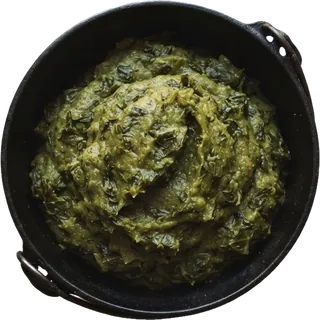
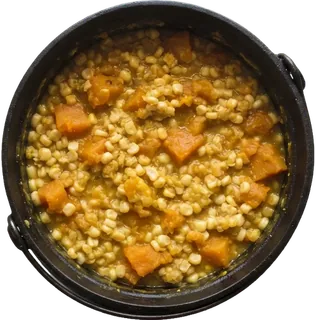
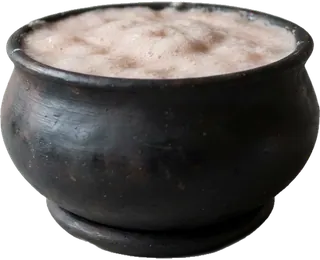
Isijingi
Pumpkin is cooked down to a pulp, then maize meal is stirred in until it thickens into a sweet, savoury porridge the colour of the squash itself. Eastern Cape households make it when pumpkins ripen in late summer and autumn, often as a filling supper on its own.
How to order
Ndicela isijingi, enkosi.
Ask whether butter or milk went into the pot with “Ingaba kukho ibhotolo okanye ubisi na?”, and if you want neither, say “Ndicela ngaphandle kwebhotolo nobisi” — without butter or milk. In Eastern Cape towns the counter usually runs in isiXhosa, with English understood as a second language in shops and taxi ranks.
History
Isijingi is a Xhosa dish, cooked through the villages and small towns of the Eastern Cape, from the former Transkei to the Amathole district, a region shaped by colonial land dispossession and the migrant labour system that sent Xhosa men to the mines while women farmed and cooked at home. Pumpkin is peeled and boiled down to a soft pulp, then maize meal is worked in by hand until the pot thickens into porridge rather than stew. It is made as pumpkins come off the vine in late summer and autumn, served as a meal on its own or alongside sour milk or bread.
Pumpkin, maize meal, salt and sugar make the base, and all of it is plant. Some cooks stir in a spoon of butter or a splash of milk at the end, for richness, and that is the only point an animal product enters the pot — it happens in the cooking, not added afterward at the table. A household that skips both makes a version with nothing but plant ingredients in it; one that adds either does not. What needs settling, then, is simply whether butter or milk went into that particular pot before it was served.
Where to get it
Cooked in homes across the Eastern Cape, around Mthatha, Qumbu and the villages of the old Transkei, and sold by the bowl at township and rural market stalls in late summer and autumn when pumpkins are in season, for a few rand a serving.